In a significant development in a high-profile firearms case, 27-year-old Jashanpreet Singh has entered a guilty plea to charges of unlawfully dealing firearms and unlawfully possessing a machine gun, according to an official statement from the US Department of Justice. The case, which has drawn attention due to its international dimensions, involves an Indian-origin individual caught in a complex web of illegal arms activities.
Arrest at San Francisco International Airport
Singh's legal troubles culminated last year when he was apprehended by authorities at the San Francisco International Airport. Law enforcement officials intercepted him as he was attempting to board a flight to India, effectively thwarting his plans to flee the country. This arrest came after a series of investigations that revealed his involvement in serious firearms violations.
Connection to Outlaw Motorcycle Gang
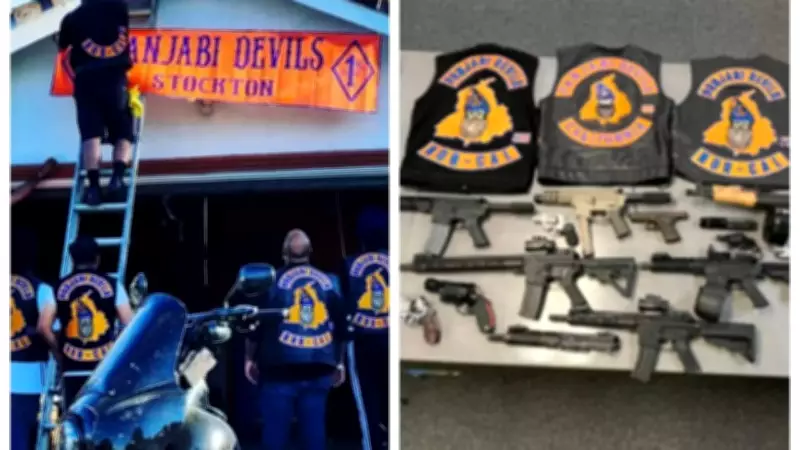
Court documents have shed light on Singh's background, revealing that he was the founder of the 'Punjabi Devils' Motorcycle Club. This Stockton-based organization has been identified as an outlaw motorcycle gang with alleged associations to the notorious Hells Angels. This connection adds a layer of organized crime elements to the case, highlighting the broader context of his activities.

Undercover Operation Reveals Illegal Arms Dealing
The Federal Bureau of Investigation (FBI) first placed Singh under surveillance after he attempted to sell multiple weapons to an undercover officer on June 6, 2025. The arsenal he offered included a short-barreled rifle, three assault weapons, three machine gun conversion devices, and a revolver. This transaction marked the beginning of a detailed investigation into his illegal operations.
Extensive Weapons Cache Discovered
Following the initial investigation, authorities conducted a thorough search of Singh's residence, uncovering an alarming collection of firearms and related equipment. Among the items seized were:
- A fully functional machine gun
- An additional machine gun conversion device
- A firearm silencer
- Various firearms parts including high-capacity drum magazines
- A short-barreled rifle
Perhaps most disturbingly, officers also discovered a single 'pineapple'-style hand grenade complete with fuse and cap, along with what law enforcement believed to be a military-grade electronic-capped "claymore" mine. These findings suggest a level of weaponry sophistication that goes beyond typical civilian firearms.
Attempted Flight and Subsequent Capture
The case took another dramatic turn when Singh failed to appear for a scheduled court hearing on July 21, prompting the state court to issue a bench warrant for his arrest. Just two days later, the FBI received crucial intelligence from US Customs and Border Protection indicating that Singh had booked a ticket to India with a departure scheduled from San Francisco International Airport on July 26.
Acting swiftly on this information, officers located and arrested Singh at the airport on the specified date, preventing his international escape. Since his apprehension, Singh has remained in federal custody awaiting further legal proceedings.
Legal Consequences and Sentencing
Singh is scheduled to face sentencing on May 11, where the court will determine his punishment based on the charges to which he has pleaded guilty. The potential penalties are substantial:
- For unlawfully dealing in firearms: A maximum statutory penalty of five years in prison and a $250,000 fine
- For unlawfully possessing a machine gun: A maximum penalty of ten years in prison and a $250,000 fine
This means Singh potentially faces up to fifteen years of imprisonment along with significant financial penalties. However, the actual sentence will be determined at the discretion of the court after careful consideration of applicable statutory factors and the federal Sentencing Guidelines, which take into account various variables specific to the case.
The case highlights the ongoing efforts of US law enforcement agencies to combat illegal firearms trafficking and the serious consequences faced by those involved in such activities, particularly when connections to organized groups are established.