Texas Election Sparks Controversial Calls for Indian Deportation
In a startling development following the special election for Texas Senate District 9, Florida Republican leader Chandler Langevin has made inflammatory remarks suggesting mass deportation of Indian residents in Texas. This comes after numerous Indian-American community members asserted that Republicans lost the election due to growing animosity toward Indians and Hindus within the party.
"Deport Every Indian in Texas" Remark Ignites Firestorm
Chandler Langevin, a prominent Florida Republican figure, declared that if Republicans indeed lost the special election because of an Indian voting bloc, then they have "all the more reason to deport every Indian in Texas." This statement has triggered widespread condemnation and highlighted the escalating tensions surrounding Indian-American communities in Texas political discourse.
North Texas Emerges as Epicenter of Anti-India Sentiment
Over recent weeks, North Texas has transformed into a focal point for India-directed hostility, fueled by various political figures, American social media influencers, and online commentators. The rhetoric has taken multiple forms:

- Influencers claiming Texas has undergone a cultural transformation following what they term an "Indian takeover"
- Social media commentators alleging that Texas employment opportunities are disproportionately going to Indian workers
- Political figures capitalizing on these narratives to advance restrictive policies
Texas Government Responds with Policy Changes
The growing anti-India sentiment has translated into concrete governmental actions. Texas Governor Greg Abbott announced a freeze on H-1B visa hiring within state agencies and universities, directly responding to claims about Indian workers taking Texas jobs. Simultaneously, Texas Attorney General Ken Paxton initiated an investigation into three Indian companies that previously hired H-1B employees, demanding comprehensive details about each worker.
Election Fallout and Misidentification
The local election loss triggered significant reaction within MAGA circles, with one prominent MAGA social media account mistakenly identifying the winning Democratic candidate, Taylor Rehmet, as Indian based solely on the "Rehmet" portion of their name. Numerous MAGA commentators blamed Indian-American voters for the Republican defeat, despite electoral records revealing that Indian-Americans constitute less than 2% of the county's voting population—insufficient numbers to create the electoral swing that occurred.
Political Distancing and Community Response
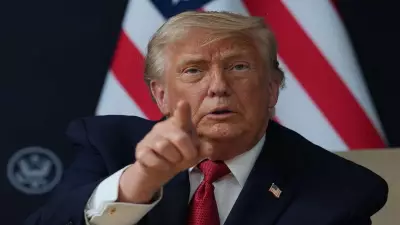
Former President Donald Trump, who had endorsed Republican candidate Leigh Wambsganss, quickly distanced himself from the election outcome, stating "I'm not involved in that. That's a local Texas race" following the surprising loss. Winning candidate Taylor Rehmet emphasized that Trump played no significant role in the local poll, instead focusing on community-centered campaigning.
Indian-American Organizations Counter False Narratives
The Hindu American Foundation's executive director, Suhag Shukla, criticized Republican strategies, pointing to incidents involving ICE agents, racist attacks targeting Indian-Americans, and politicians advocating for Hindu temple closures. The Indian-American Advocacy Council directly challenged Langevin's deportation comments, stating Republicans didn't lose because of any "Indian voting bloc."
The council elaborated: "They lost because there are millions of decent, good-faith Americans who don't want racism, xenophobia, and trash politics running their communities. That's the truth. And we LOVE each and every one of those Americans. They are on OUR TEAM and there's nothing you can do about it."
Broader Context: Gold Scam Investigation
Adding complexity to the situation, Texas authorities recently uncovered a major gold scam involving multiple Indian individuals and Indian jewelry stores. While unrelated to the election, this development has contributed to the heightened scrutiny of Indian communities in Texas.
The convergence of electoral politics, immigration rhetoric, and cultural tensions has created a volatile environment for Indian-Americans in Texas, with implications that extend far beyond state boundaries.