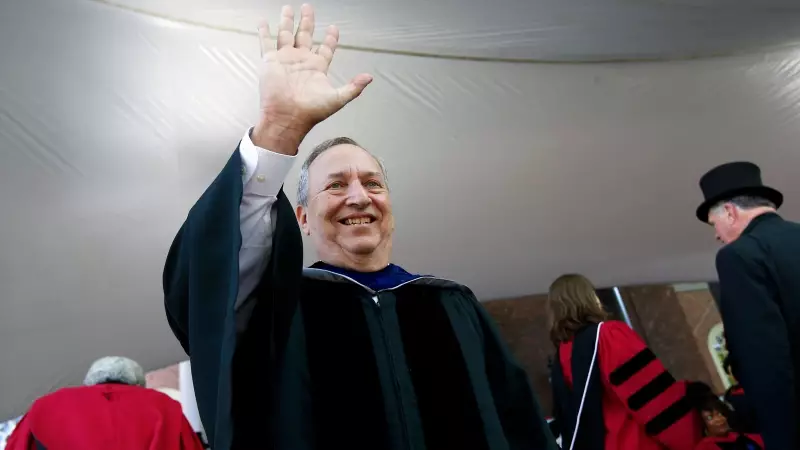
In a significant development that has rocked academic and political circles, former US Treasury Secretary Larry Summers has stepped down from his position as a Harvard University professor. This decision comes following the emergence of emails revealing his communications with convicted sex offender Jeffrey Epstein.
The Email Revelations That Sparked the Resignation
The controversy erupted when recently unsealed court documents revealed multiple email exchanges between Summers and Epstein spanning several years. These communications showed that the former Treasury Secretary maintained contact with the financier even after Epstein's 2008 conviction for soliciting prostitution from a minor.
According to the disclosed correspondence, Summers and Epstein discussed various matters including financial advice and university donations. The emails particularly highlighted Epstein's involvement in facilitating a substantial donation to Harvard from billionaire investor Leon Black. This revelation raised serious questions about Summers' judgment in maintaining professional ties with a convicted sex offender.

Harvard's Response and Immediate Fallout
Harvard University, facing mounting pressure over the association, confirmed Summers' departure from his position as the Charles W. Eliot University Professor. University representatives emphasized that the decision was made mutually, though sources indicate the institution had grown increasingly uncomfortable with the negative attention stemming from the Epstein connection.
The timing of this resignation is particularly significant as it coincides with increased scrutiny of elite institutions' relationships with controversial figures. Harvard, like several other prestigious universities, has been grappling with the legacy of its connections to Epstein, who despite his criminal record, maintained relationships with numerous academics and scientists.
Broader Implications for Academic Institutions
This incident has sparked broader conversations about ethical standards in higher education and the boundaries of fundraising practices. Many are questioning how someone of Summers' stature and experience could maintain professional connections with a known sex offender, especially given his position of influence at one of the world's most respected educational institutions.
The Summers-Epstein email exchange particularly highlights the complex web of financial and professional relationships that often exists between wealthy donors, academic institutions, and prominent figures. The case has prompted calls for more transparent guidelines regarding associations with controversial donors and stricter ethical protocols within academic governance.
As the academic community processes this development, attention now turns to how Harvard and similar institutions will reform their donor relationship policies to prevent similar controversies in the future. The Summers resignation serves as a stark reminder that even the most established figures face accountability for their professional associations.