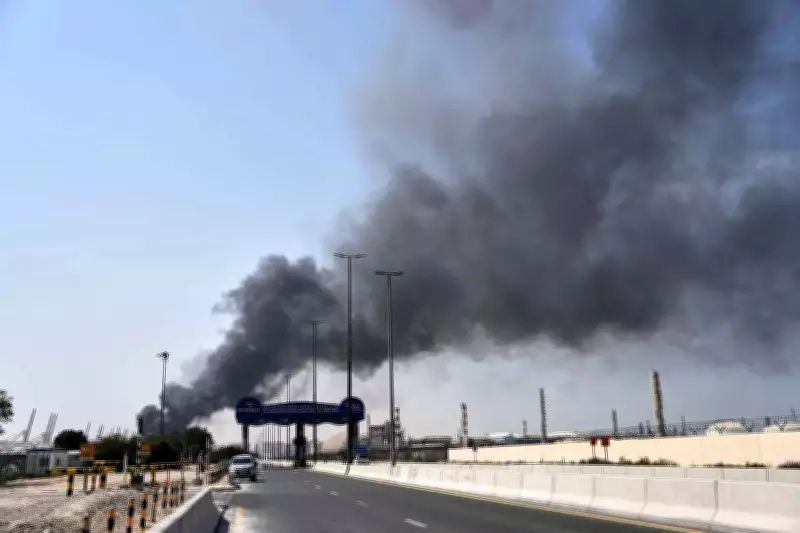
Gulf Allies Urge Trump to Continue Military Action Against Iran
According to American, Gulf, and Israeli officials, the United States' Gulf allies, led by Saudi Arabia and the United Arab Emirates (UAE), have reportedly urged US President Donald Trump to continue military action against Iran. They argue that Tehran has not been sufficiently weakened by the monthlong US-led bombing campaign, signaling a significant shift in regional dynamics.
Reversal in Regional Stance
This development represents a stark reversal in the stance of Middle Eastern states. Initially, at the outset of the conflict, these nations privately criticized the lack of advance notice for the US-Israeli strikes and warned that the war could have "catastrophic consequences" across the region. Now, they are pressing the White House to seize what they see as a "historic opportunity" to dismantle Tehran’s clerical regime "once and for all."
One official told the AP that "Saudi Arabia, the UAE, Kuwait, and Bahrain have conveyed that they do not want the military operation to end until there are significant changes in Iranian leadership or a dramatic shift in Iran’s behaviour."

Divisions Among Gulf States
While regional leaders are now generally supportive of Washington’s efforts, divisions remain. Saudi Arabia and the UAE are leading calls to increase military pressure on Tehran. According to a Gulf diplomat, the UAE has emerged as perhaps the "most hawkish" of the Gulf states, pushing for a ground invasion after claiming to have faced more than 2,300 missile and drone attacks from Iran. Kuwait and Bahrain are also reported to back such a move.
In contrast, Oman and Qatar, historically intermediaries between Iran and the West, continue to advocate for a diplomatic solution, highlighting ongoing regional tensions.
Specific Demands and Threats
Saudi Arabia has informed the US that ending the war now would not produce a "good deal" that guarantees security for Iran’s Arab neighbors. Riyadh is demanding that any eventual settlement neutralize Iran’s nuclear programme, destroy its ballistic missile capabilities, end support for proxy groups, and prevent the Islamic Republic from shutting down the Strait of Hormuz. About 20% of the world’s oil flows through this critical waterway, which Iran has threatened during the current crisis.
Senior Emirati officials have taken a sharper tone, with Noura Al Kaabi, a UAE minister of state, writing in a column: "An Iranian regime that launches ballistic missiles at homes, weaponizes global trade and supports proxies is no longer an acceptable feature of the regional landscape. We want a guarantee that this will never happen again."
Trump's Ambiguous Position
The push from Gulf nations comes as Trump alternates between suggesting that the Islamic Republic's "weakened" leadership is ready for a settlement and threatening to further escalate the conflict if a deal is not reached swiftly. He has not called on Middle Eastern nations to join offensive operations, possibly due to complications in coordinating multiple militaries, especially given that only the UAE and Bahrain have formal diplomatic relations with Israel.
Early in the conflict, friendly fire incidents, such as the downing of three American F-15E Strike Eagles and a KC-135 refuelling aircraft crash that killed six service members, have added to the complexity.
Retaliatory Threats and Regional Risks
In retaliation for the February 28 strikes, Iran has targeted US bases and Israeli territory. It has also threatened to target its neighbours’ critical infrastructure, including desalination plants, if the US strikes Iranian power plants to force the reopening of the Strait of Hormuz. Last week, Trump extended an ultimatum for Tehran to reopen the waterway, reflecting ongoing diplomatic maneuvering.
Saudi Arabia’s Crown Prince Mohammed bin Salman has told Trump administration officials that further weakening Iran’s military capabilities and clerical leadership would serve the long-term interests of the Gulf region and beyond, underscoring the high stakes involved.