'Bombing Was the Only Option': GOP Lawyer's Explosive Defense of Trump's Iran War Decision
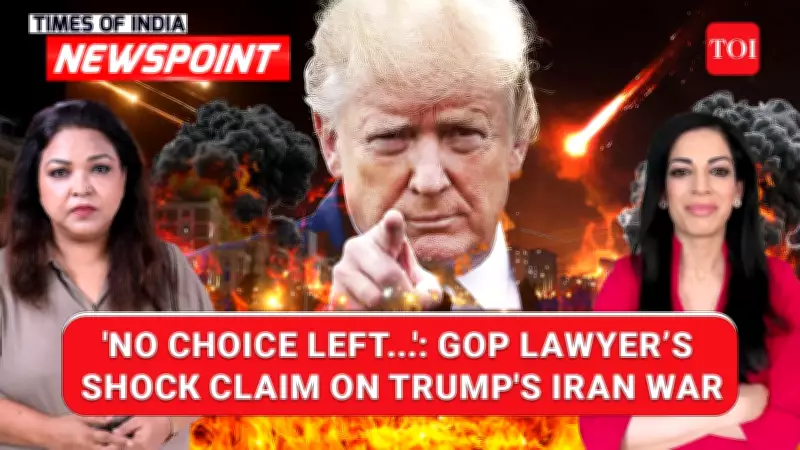
In a fiery and contentious interview on TOI Newspoint, Republican lawyer and staunch Trump supporter Meek Cooke delivered a robust and unapologetic defense of former President Donald Trump's decision to authorize military strikes against Iran. Cooke's remarks have ignited a fresh wave of debate, as he addressed critical issues including deepening divisions within the MAGA movement, the economic fallout of rising oil prices, and the profound global consequences that could stem from a potential regime change in Tehran.
An Unwavering Defense of Military Action
Cooke left no room for ambiguity in his stance, emphatically declaring that "bombing was the only option" available to the Trump administration in response to the escalating tensions with Iran. He argued that the strikes were a necessary and proportional measure to counter what he described as "aggressive provocations and threats to regional stability" emanating from Tehran. According to Cooke, the decision underscored Trump's commitment to a "peace through strength" foreign policy doctrine, aimed at deterring further Iranian aggression.
Addressing Internal MAGA Divisions and Economic Concerns
The interview also delved into the growing rifts within the MAGA base regarding foreign policy. Cooke acknowledged that some Trump supporters have expressed reservations about military interventions, fearing prolonged entanglement and financial strain. However, he sought to reassure them by framing the action as a "surgical and decisive move" intended to avoid a larger conflict. On the economic front, Cooke addressed concerns over surging oil prices triggered by the strikes. He contended that while short-term volatility is inevitable, the long-term benefits of a more stable Middle East would ultimately secure energy supplies and benefit global markets.

The Global Implications of Regime Change in Tehran
Perhaps the most provocative segment of the discussion centered on the possibility of regime change in Iran. Cooke speculated that a shift in Tehran's leadership could have far-reaching repercussions for international relations. He suggested that a new, more moderate government might open doors for diplomatic engagement and reduce regional tensions. Conversely, he warned that a power vacuum or the rise of an even more hardline faction could exacerbate instability. Cooke emphasized that the Trump administration's actions were designed to pressure the current regime, potentially paving the way for internal reform or change, which he argued would be a positive development for global security.
The interview, which aired on March 9, 2026, has quickly become a focal point in the ongoing discourse surrounding U.S.-Iran relations and Trump's foreign policy legacy. Cooke's forthright defense highlights the enduring and polarized nature of debates over military intervention, economic impact, and the quest for geopolitical stability in one of the world's most volatile regions.