

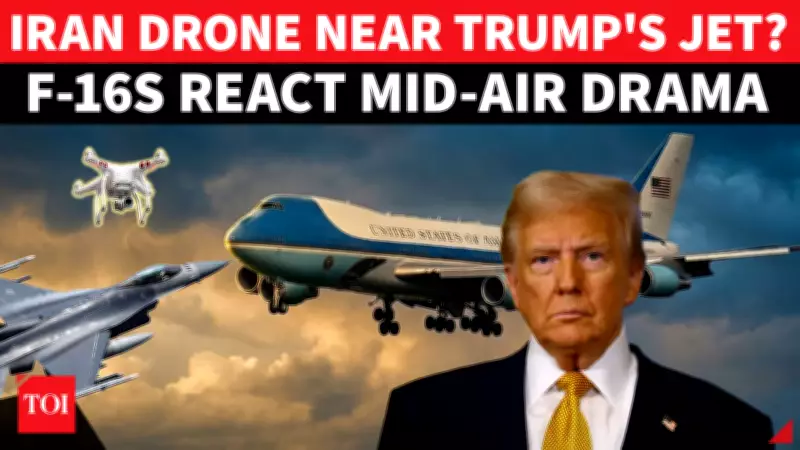
F-16 Fighter Jets Scramble and Fire Flares Amid Airspace Breach Near Trump's Air Force One in Florida
Security alarm bells rang loudly across Florida on March 30, 2026, following a double airspace scare that unfolded near President Donald Trump's Air Force One at Palm Beach International Airport. The incident, which triggered emergency protocols and raised serious concerns over high-level security vulnerabilities, involved two separate but closely timed events that put authorities on high alert.
Drone Sighting Triggers Emergency Response Minutes Before Departure
According to official reports, the first security threat emerged just minutes before the President's scheduled departure when airport personnel and security teams reported a suspicious drone sighting in the vicinity of Air Force One. This immediate concern activated comprehensive emergency protocols, including a temporary ground stop that halted all airport operations and the rapid deployment of security helicopters to secure the skies around the presidential aircraft.
The drone sighting alone would have been concerning enough, but the situation escalated dramatically moments later when a civilian aircraft breached the restricted airspace surrounding Air Force One. This second violation prompted the North American Aerospace Defense Command (NORAD) to take decisive action, scrambling F-16 fighter jets from nearby military bases to intercept the unauthorized aircraft.

F-16 Interception and Flare Deployment
As the F-16 fighter jets approached the civilian aircraft that had entered restricted airspace, pilots deployed warning flares as part of standard interception procedures. The visual signals served as both a warning to the unauthorized aircraft and a demonstration of the serious military response to the airspace violation. The civilian aircraft was subsequently intercepted and safely escorted away from the restricted zone without further incident.
While officials later denied any direct threat to President Trump and insisted the Commander-in-Chief was never in immediate danger, the confusion surrounding multiple simultaneous incidents and airspace violations has raised fresh concerns about security vulnerabilities around one of the most protected aircraft in the world. The fact that both a drone sighting and civilian aircraft breach occurred in such close proximity to Air Force One has prompted questions about the effectiveness of current security measures.
Security Implications and Official Response
The dual incidents have highlighted potential gaps in the security apparatus designed to protect the President during travel. Security experts note that while individual threats might be manageable, the combination of multiple security breaches occurring simultaneously presents a particularly challenging scenario for protection teams.
Official statements from the White House and security agencies emphasized that all protocols functioned as designed and that President Trump's safety was never compromised. However, the events have undoubtedly sparked renewed discussions about enhancing airspace security measures around presidential movements, particularly given the increasing accessibility of drone technology and the constant challenge of monitoring civilian air traffic near restricted zones.
The incident serves as a stark reminder of the complex security challenges facing presidential protection details in an era of evolving technological threats and crowded airspace, with implications that extend far beyond this particular event in Florida.






