

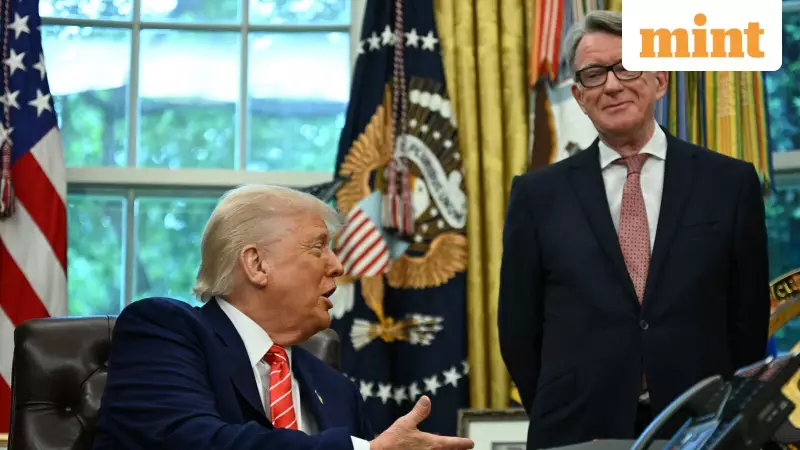
Political Earthquake: Republicans Force Trump's Hand on Epstein Files
In a significant political development, President Donald Trump has signed legislation requiring the Department of Justice to release its files on late sex offender Jeffrey Epstein. This move came after both houses of Congress approved the measure with overwhelming support, marking a notable break from the administration's previous stance.
The House passed the legislation with a 427-1 vote, while the Senate gave its unanimous consent on Tuesday. Despite resisting for months, President Trump signed the bill late Wednesday, appearing eager to move past the controversy.
Corporate America's Dilemma: Reading the Political Tea Leaves
This Republican rebellion against the Trump administration could have far-reaching implications for corporate America. Several major companies, including Target, Walmart, and McDonald's, had previously altered their corporate policies following executive orders from Trump early in his administration.

These changes included removing diversity, equity, and inclusion (DEI) initiatives. Despite facing consumer backlash, most companies have maintained their revised policies. The current political shift, however, might prompt business leaders to reconsider their alignment with the administration.
Vanessa Williamson, a senior fellow in governance studies at the Brookings Institution, views this development as particularly significant. "It's the first time you are seeing Republican officials break in a meaningful way with this administration," Williamson noted in an interview.
Legal and Corporate Implications: Navigating Uncertain Waters
The political landscape appears to be shifting, with Williamson pointing to recent election results as evidence that "Republicans aren't looking as strong electorally." This perception could influence how corporate leaders approach their relationship with the administration.
David Garland, an employment litigator with Epstein Becker & Green in New York, offers a more cautious perspective. While acknowledging the unique circumstances surrounding the Epstein files, he believes that only a Democratic majority in Congress after the midterms would bring "far more significant ramifications" for corporate policies.
The episode has highlighted the risks for companies that have closely aligned themselves with the Trump administration. Williamson warns that such businesses "are risking reputational damage," particularly those like Amazon.com, Apple, and Alphabet's Google that have funded Trump's East Wing ballroom events.
Meanwhile, law firms that resisted the administration's punitive measures might serve as examples for corporate executives. Stanford Law professor Mark Lemley notes that even Trump's Department of Justice lawyers appear to recognize they have "a losing issue" in cases against firms that fought government restrictions.
As the political dynamics continue to evolve, corporate America faces the challenge of navigating an increasingly complex landscape while maintaining both legal compliance and public trust.






