US Homeland Security Faces Partial Shutdown Amid Immigration Funding Battle
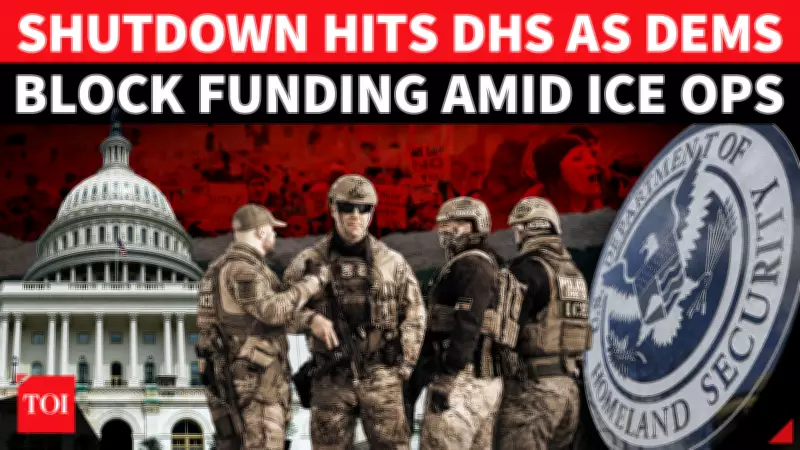
A significant crisis has erupted within the United States Department of Homeland Security (DHS), as the agency led by Secretary Kristi Noem enters a partial shutdown following Congress's failure to approve a critical funding bill. This development represents a major setback for President Donald Trump's ongoing immigration enforcement initiatives, plunging federal operations into uncertainty.
Political Deadlock Over Immigration Enforcement
The funding impasse stems from intense political polarization surrounding Immigration and Customs Enforcement (ICE) operations. Democrats in Congress are demanding comprehensive restrictions on federal immigration agents, while Republicans are resisting key provisions, creating a legislative stalemate that has brought DHS funding to a halt.
This political confrontation follows nationwide outrage triggered by the fatal shootings of Renee Good and Alex Pretti during ICE-linked operations in Minnesota. These incidents have amplified calls for reform and intensified the debate over immigration enforcement tactics.

Operational Uncertainty for Immigration Agencies
The central question now facing federal authorities is whether ICE and Customs and Border Protection (CBP) can continue their enforcement activities despite the DHS shutdown. While billions of dollars were previously allocated under President Trump's 2025 spending legislation, potentially allowing some enforcement to proceed, the shutdown creates significant operational challenges.
Thousands of other DHS employees across various departments face potential furloughs or may be required to work without pay during the funding lapse. This situation threatens to disrupt numerous homeland security functions beyond immigration enforcement.
Broader Implications for Homeland Security
The partial shutdown represents a critical moment in Washington's ongoing immigration battle, which has reached a boiling point after years of contentious debate. The failure to pass funding legislation highlights the deep divisions within Congress regarding immigration policy and enforcement priorities.
As the shutdown continues, its effects will ripple through multiple DHS components, potentially compromising various security functions while immigration enforcement remains at the center of political negotiations. The situation underscores the complex relationship between congressional appropriations and executive branch operations in the realm of homeland security.