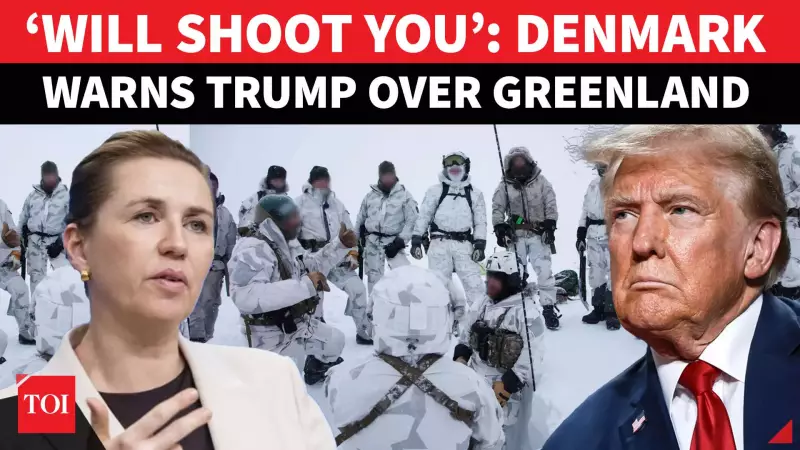
In a development that has sent shockwaves through diplomatic circles, Denmark has officially confirmed that a decades-old military directive, mandating its forces to open fire immediately on any invading army without waiting for orders, is still fully operational. This startling revelation comes at a time when former and potential future U.S. President Donald Trump has once again brought the idea of annexing Greenland, a vast autonomous territory of Denmark, into the global spotlight.
A Cold War Relic in a Modern Geopolitical Storm
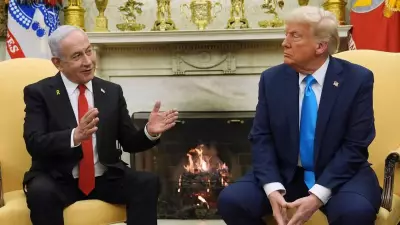
The Danish military's standing order, a relic from the tense Cold War era, requires soldiers to counterattack any invading force on sight. The policy, often summarized as 'will shoot first, ask questions later', is designed for rapid response to aggression. Its confirmation in January 2026 is directly linked to renewed public statements from Donald Trump, who has cited American national security interests as a reason for acquiring Greenland.
Trump's comments have not only stunned the government in Copenhagen and the local administration in Greenland's capital, Nuuk, but have also triggered urgent and alarmed discussions among NATO allies across Europe. The prospect of a member state militarily moving against the territory of another member is an unprecedented scenario for the alliance, founded on mutual defence.

Potential for an Unprecedented NATO Rupture
Senior officials and analysts are warning that any concrete U.S. action towards Greenland could spark the most severe crisis in NATO's history. The core fear is a historic rupture in transatlantic relations, challenging the very foundation of European security and sovereignty post-World War II. Such an event would force European nations to choose between their alliance with the United States and the principles of territorial integrity that bind the continent.
The situation is further inflamed by domestic political reactions. In the United States, some lawmakers, like Senator John Kennedy, have broken ranks with Trump to publicly condemn the potential invasion plan. Meanwhile, in Greenland itself, residents and leaders are voicing strong opposition, with many reiterating calls for eventual independence from Denmark, not absorption by another power.
Broader Context of Global Tensions
This Greenland controversy does not exist in isolation. It emerges amidst other volatile international actions linked to Trump's previous tenure, including raids in Venezuela and seizures of ships, which have drawn anger from leaders like Nicolas Maduro and Vladimir Putin. The combination of these events paints a picture of a potential second Trump administration willing to pursue highly aggressive and unilateral foreign policy moves that could destabilize long-standing global alliances.
The confirmation of Denmark's shoot-first policy acts as a stark reminder that European nations are prepared to defend their territory. It sets the stage for a potential, and previously unthinkable, military confrontation between NATO partners, making the Greenland issue a flashpoint for global order.