Democrats Score Stunning Texas Victory in Trump Stronghold
In a political earthquake that has sent shockwaves through Washington, Democrats have achieved an improbable victory in the heart of Republican territory. Taylor Rehmet, a United States Air Force veteran and union machinist, has decisively defeated Republican candidate Leigh Wambsganss by a margin of 57% to 43% in a Texas state senate special election. This represents a dramatic swing of approximately 30 percentage points from the 2024 results and marks the first time in decades that a Democrat will hold the District 9 seat.
A District Built for Republican Victory
The election, triggered by the resignation of a longstanding GOP stalwart, was held in a district that voted overwhelmingly for Donald Trump, with a margin of +17 points. This deep red stronghold was considered safe Republican territory, making the Democratic flip particularly shocking to political observers and Republican strategists alike. The stunning outcome has ignited intense debate and soul-searching within Republican ranks about their electoral strategy in the Trump era.
Indian-American Community Emerges as Pivotal Force
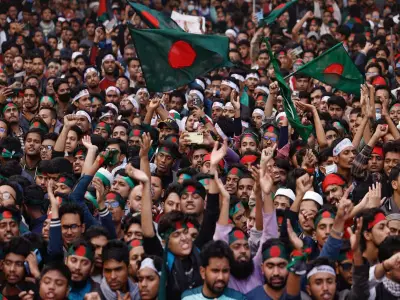
Perhaps the most significant development emerging from this election is the prominent role attributed to the Indian-American community in triggering this political turnaround. Multiple claims from Indian-American activists and analysts suggest that toxic MAGA attacks on their community served as a powerful mobilizing force against Republican candidates.

Critics have pointed specifically to Wambsganss' campaign rhetoric, which echoed broader MAGA attacks on H-1B visas and immigration. The Republican candidate reportedly labeled Indian migrants as an "invasion" and described them as "unassimilable," language that was amplified across social media platforms including X, where some users went further by describing Indians as "scammy" and making unfounded accusations of electoral fraud.
Demographic Shifts and Voter Mobilization
Tarrant County, which comprises a substantial portion of District 9, is home to a rapidly growing Indian American population estimated at over 50,000 residents. Many in this community work in technology and professional sectors, representing an educated, engaged demographic with increasing political influence.
Voter turnout data from the election reveals heightened participation in precincts with high Asian American density, suggesting that mobilization against perceived ethnic scapegoating played a significant role in the outcome. Some political analysts have suggested that inflammatory rhetoric may have energized backlash among recent foreign-origin voters in diverse suburban areas, turning what might have been a routine Republican victory into a stunning Democratic upset.
Social Media Reaction and Political Fallout
The election results have sparked vigorous discussion on social media platforms, with many Indian-American voices claiming vindication. One prominent Indian-American handle on X declared: "What happened yesterday in Texas is a reminder: Don't mess with Indians. We are a moderate people and a key swing vote. Brown people are fed up with the GOP. Keep on attacking us and you will lose."
The outcome also represents a significant setback for Abraham George, an Indian-American who chairs the Texas Republican Party. Despite being a MAGA figure himself, George has faced attacks from within his own party due to his Indian background, highlighting the complex dynamics at play within Republican politics.
Analytical Caution and Broader Political Context
While the connection between anti-Indian rhetoric and the election outcome has gained considerable attention, political analysts urge caution. There is no direct polling or exit data that ties the District 9 flip solely to backlash against inflammatory language targeting Indian-Americans. Campaign messaging can cut multiple ways in complex local political ecosystems, and attributing the entire outcome to a single factor risks oversimplification.

Nevertheless, the Texas result fits into a broader, more ominous trend for the Republican Party nationally. Since Donald Trump's second inauguration in January 2025, Democrats have consistently overperformed in special elections across the country. According to political analysis from The Downballot, Democrats are outperforming their 2024 presidential benchmarks by an average of 15.7% in these contests.
National Democratic Momentum
The Texas victory represents just one piece of a larger pattern of Democratic success in unexpected places. Throughout 2025, Democrats have flipped state legislative seats once considered safely Republican, including:
- A Pennsylvania state senate seat that Trump carried in previous elections
- Competitive wins in Iowa and Kentucky state legislative races
- Gains in Georgia public service commission special elections, turning two previously Republican-held seats to Democratic control
At the municipal level, Democratic strength was also evident in the November 2025 New York City mayoral election, where Zohran Mamdani captured the mayor's office with more than 50% of the vote in a high-turnout contest.
Republican Reaction and Future Implications
Republican leaders in Texas have acknowledged the surprise nature of their defeat. Lieutenant Governor Dan Patrick described the outcome as a "wake-up call," noting that while special election dynamics can sometimes defy expectations, Republicans must regroup ahead of the crucial November elections.
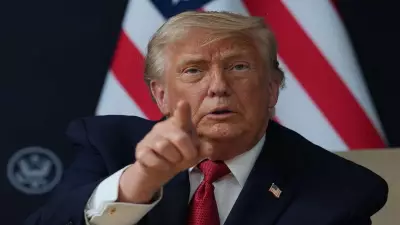
Donald Trump, who endorsed Wambsganss and urged turnout in the final days of the campaign, has attempted to distance himself from the loss. The former president characterized it as a "local" contest that he was unaware of, despite his active involvement in supporting the Republican candidate.
This Texas special election has raised fundamental questions about Republican strategy in the Trump era, particularly regarding messaging toward immigrant communities and the party's approach to diverse suburban voters who are increasingly determining electoral outcomes in competitive districts.