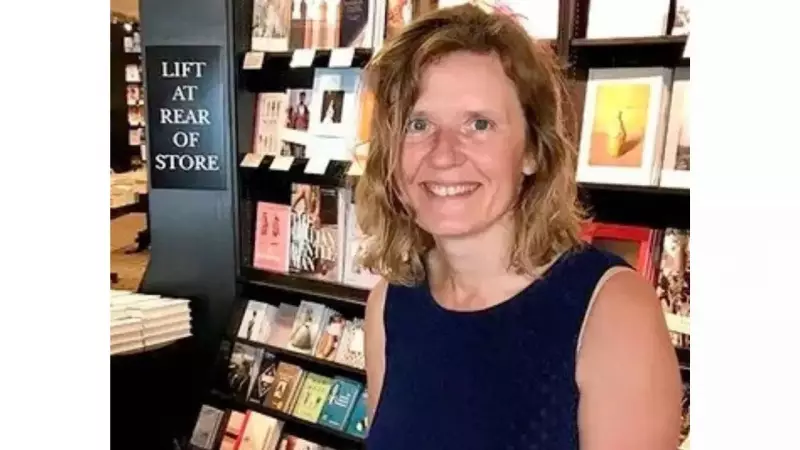
In early 2017, Svetlana Lokhova, a historian educated at Cambridge University and a young mother residing in England, found herself at the centre of a bewildering media firestorm. Out of the blue, news reports began labelling her as a Russian spy alleged to have had an affair with a top US official. Within a matter of days, her name was irrevocably woven into the fabric of the sprawling Trump-Russia investigation, popularly known as Russiagate, despite her having zero involvement in US politics or intelligence activities.
The Innocent Meeting That Sparked a Political Inferno
The chain of events that would upend Lokhova's life began innocuously in 2014 at a public academic dinner in Cambridge. Among the attendees was Michael Flynn, then a retired US Army general. Their interaction was brief, public, and entirely unremarkable—a typical exchange at such scholarly gatherings. At that moment, there was no political significance attached to the encounter, as Flynn had not yet joined Donald Trump's team, and Lokhova was an academic with no public profile.
However, this ordinary moment was catastrophically reinterpreted when Flynn became Trump's National Security Adviser in January 2017. As intense scrutiny fell on Trump's inner circle, every past contact was re-examined for potential foreign links, no matter how tenuous. Lokhova's brief meeting was suddenly cast in a sinister light.

How a Baseless Claim Entered and Persisted in FBI Files
According to declassified records, the allegation against Lokhova entered official channels through an FBI informant named Stefan Halper. Halper told the FBI that Lokhova was a Russian intelligence asset and claimed to have witnessed an affair between her and Flynn—claims Lokhova has consistently and vehemently denied as pure fiction.
The critical detail that later emerged from these same files was an internal FBI note that described the allegation as implausible and unsupported. Despite this clear internal doubt about the claim's credibility, the FBI did not formally shut it down. Lokhova argues that this failure allowed the unverified allegation to fester within intelligence channels and eventually leak to the media.
From Secret Files to Public Ruin
Once the allegation entered the public domain, it took on a destructive life of its own. Media reports, often citing anonymous intelligence sources, repeated the insinuation. Lokhova states she was never given a proper chance to respond before publication. The consequences were immediate and severe:
- Academic opportunities and her professional standing evaporated.
- Friendships collapsed under the weight of suspicion.
- She faced harassment and threats, forcing her to retreat from public life on police advice.
Although some outlets later amended or removed their stories following legal action, the reputational damage was already irreversible.
The Long Fight for Vindication
For years, Lokhova lived in isolation, seeking proof of what authorities held about her. She says the FBI repeatedly denied having any files, even as she was informally told her name was in intelligence records. The breakthrough came in January 2021, when documents related to the FBI's Crossfire Hurricane probe were declassified on Donald Trump's orders.
These materials finally confirmed her assertions: her name was indeed in FBI records, the allegation had been logged, and, crucially, internal assessments had questioned its credibility. The documents did not link her to Russian intelligence, election interference, or any collusion.
However, Lokhova's hope for accountability was short-lived. No one was charged in relation to her case, and some documents were later reclassified. She sees this as protecting institutions rather than correcting a grave injustice.

Reflecting on her ordeal, Lokhova recently wrote, "That woman was me." She describes being falsely accused, erased as a person, and turned into a mere tool within a grand political narrative. Today, she sees herself as collateral damage of Russiagate—a bystander crushed by a political war she never chose to enter. Her story is a stark reminder that behind historic political scandals are real individuals whose shattered lives do not simply reset when the news cycle moves on.