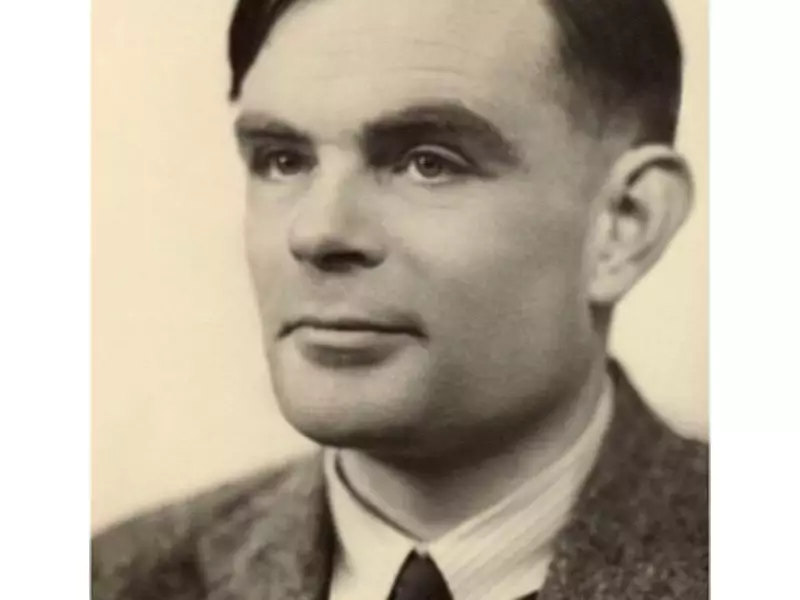
Alan Turing: The Codebreaker Who Shortened WWII and Shaped Computing
War rarely hinges on a single individual, yet certain names persistently emerge when revisiting the history of World War II. Alan Turing stands prominently among them. Born in London in 1912, Turing trained as a mathematician and logician, seamlessly bridging theoretical concepts with practical machinery. When Britain entered the war in 1939, he joined the Government Code and Cypher School at Bletchley Park, where covert efforts were underway to decipher encrypted German military communications.
The Decisive Impact of Turing's Codebreaking
His contributions to codebreaking, particularly against Germany's Enigma system, are widely regarded as decisive. Historians continue to debate the precise scale of his impact, but few dispute that his work altered the war's pace and direction. Before the conflict, Turing had already laid foundational ideas for computer science. At King's College, Cambridge, he authored a paper describing a universal machine capable of executing any computable task with proper instructions—a theoretical device that never needed physical construction but became a cornerstone of the discipline.
After completing a doctorate in mathematics at Princeton University in 1938, Turing's focus on logic and machines intensified. These early concepts quietly underpinned his practical wartime endeavors and later earned him the enduring title of 'The father of modern computer science', a phrase often cited with reverence.

Bletchley Park: The Heart of Britain's Secret War
Following Germany's invasion of Poland in September 1939, Britain's codebreaking operations expanded rapidly. Bletchley Park, a country estate in Buckinghamshire, transformed into a hub for mathematicians, linguists, and engineers. Their mission was straightforward yet formidable: intercept and decode Germany's encrypted messages.
The German military relied on the Enigma machine, which used rotating wheels to scramble text into billions of possible combinations. Although Polish mathematicians had earlier made progress and shared their findings with Britain, German operators changed settings daily at the war's onset, heightening security. Turing immersed himself in this effort full-time, enduring long hours of secret, routine, and often repetitive work with little public acknowledgment.
The Bombe Machine: Accelerating Codebreaking Success
To tackle Enigma at scale, Turing collaborated with colleague W.G. Welchman to design the Bombe, an electromechanical device that tested potential settings swiftly, narrowing options for human analysts. Installed initially in 1940, these machines were not magical solutions; they still depended on educated guesses about German communication patterns. However, they drastically reduced weeks of labor to mere hours.
By mid-war, signals from the German Air Force were being deciphered regularly, providing intelligence that guided naval convoys and military strategies. Estimates suggest that Bletchley Park's efforts shortened the war by two to four years, a figure debated by scholars but widely accepted for its broad influence. Turing's role was technical and focused, yet colleagues later described him as central to the Enigma effort, affectionately calling him 'Professor'.
Saving Lives and Shaping Post-War Computing
The impact of decrypted messages was often indirect but profound: convoys evaded U-boat patrols, aircraft were redirected, and operations were subtly adjusted. While not every decision stemmed from codebreaking, enough did to save countless lives across Europe. Turing's work, though desk-bound, contributed significantly to wartime outcomes measured in human terms.
After 1945, Turing redirected his focus to computing. At the National Physical Laboratory, he contributed to the design of the Automatic Computing Engine, an early stored-program computer. In 1949, he moved to the University of Manchester, aiding software development for the Manchester Mark 1 and exploring artificial intelligence, including the provocative question of whether machines could think. His ideas were speculative and ahead of their time, sparking controversy yet pushing boundaries.

A Tragic End and Lasting Legacy
In 1952, Turing's scientific career was abruptly halted when police investigating a burglary at his home uncovered his relationship with Arnold Murray. Homosexuality was illegal in Britain then, leading to charges of gross indecency for both men. On June 8, 1954, Turing's cleaner found him dead in bed with a partially eaten apple nearby; he had died by cyanide poisoning the previous day, ruled a suicide.
In discussions of World War II heroes, soldiers and statesmen often take precedence. Turing's contributions were quieter, unfolding in rooms filled with paper and wires, yet their repercussions extended far beyond those confines, cementing his legacy as a pivotal figure in both wartime history and technological advancement.