UN Chief Guterres Delivers Blunt Critique on Security Council's Veto Power
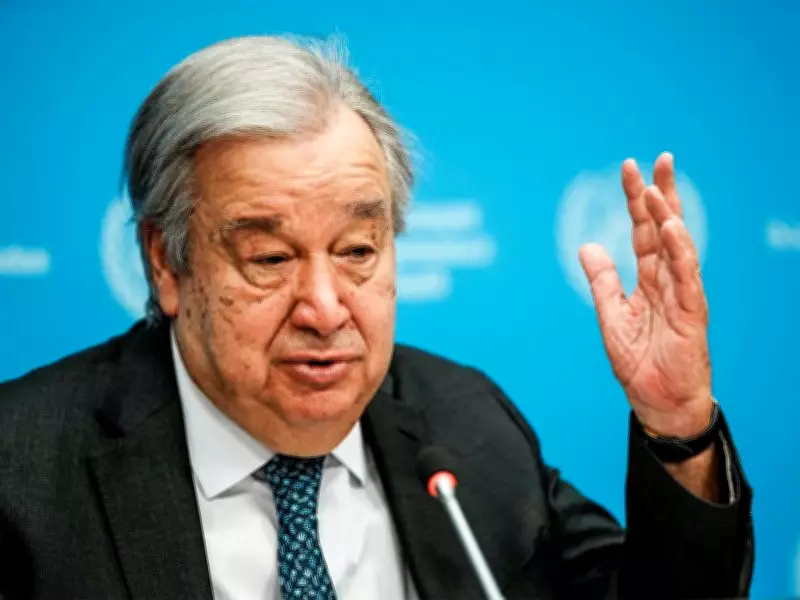
In a stark and candid admission, United Nations Secretary-General Antonio Guterres has declared that the veto power wielded by permanent members of the UN Security Council effectively disempowers the body, preventing it from fulfilling its mandate to maintain international peace and security. Speaking at a press conference in Beirut, Guterres highlighted the Council's outdated structure and its failure to represent contemporary global dynamics.
Security Council's Legitimacy and Efficiency Under Scrutiny
Guterres emphasized that the Security Council, established in 1945, no longer mirrors the world as it exists today. He pointed out that three of its five permanent members are from Europe, one from Asia (China), and one is the United States, with no representation from Africa or Latin America. This imbalance, he argued, undermines the Council's legitimacy, especially given Asia's significant population and economic weight.
The core issue, according to Guterres, is the frequent use of the veto by permanent members, which repeatedly blocks decisive action in conflict zones. He lamented that time and again, when situations demand intervention to halt violence, vetoes emerge, paralyzing the Council. This pattern has been evident in recent conflicts, including the Ukraine war, the Israel-Hamas conflict, and tensions involving Iran.

India's Persistent Call for UN Security Council Reform
India has been a vocal advocate for reforming the Security Council for decades, pushing for expansion in both permanent and non-permanent categories. The country argues that the 15-nation Council is ill-suited for 21st-century challenges and does not reflect current geopolitical realities. India asserts its rightful place as a permanent member, having last served as a non-permanent member in 2021-22.
The Council's polarization has hindered its ability to address pressing peace and security issues, with members deeply divided on key conflicts. Guterres expressed pessimism about immediate changes, stating he does not expect short-term improvements in this gridlock.
Broader Implications for Global Governance
This critique underscores a growing consensus on the need for UN reform to enhance its effectiveness in conflict resolution. The veto power, while intended to prevent hasty decisions, has often been criticized for enabling political stalemates that exacerbate crises. As debates on restructuring continue, the call for a more inclusive and representative Security Council gains momentum, with nations like India leading the charge for a system that better aligns with modern international relations.