US Vice President JD Vance has outlined a three-point framework at the centre of a proposed peace agreement between Washington and Tehran, stressing that Iran must forgo nuclear weapons, keep the Strait of Hormuz open and meet strict conditions before receiving any economic benefits.
Speaking in an interview with Fox News, Vance said, “The agreement is actually very simple. One, Iran can't have a nuclear weapon. Two, the Straits of Hormuz are open. And number three, there are all of these benefits contemplated that the Iranians can get if they behave.”
His remarks come as the United States and Iran move closer to signing a peace agreement in Switzerland on Friday.

Vance said any economic relief for Tehran would depend on significant changes in its conduct, including ending support for militant groups and abandoning efforts to rebuild its nuclear programme.
“If they stop developing terrorism, if they stop funding terrorism, if they stop supporting the rebuilding of the nuclear arms program, they actually can get some real benefits. If they don't do any of that stuff, they don't get anything,” he said.
The vice president also criticised what he described as attempts by Iranian officials to misrepresent the proposed deal.
“Iranian propagandists out there [are] saying well we get all these things and they leave out the fact that they only get those things if they fundamentally transform themselves as a country,” Vance said. According to Vance, the United States would benefit regardless of how Tehran responds to the agreement.
“The United States wins either way, as the President said. Either they get nothing, we destroy their nuclear program and the Straits of Hormuz are open, or they fundamentally transform themselves and that's a big win too. It's really up to them,” he added.
The US vice president said Iran would effectively enter a probationary phase under the proposed arrangement, with Washington judging Tehran on its actions rather than its commitments.
“The thing I've learned from the President of the United States is whether friend or foe, you shouldn't trust anybody, you should trust people's actions,” Vance said.
“That's why the way this agreement is built is that if they act in the right way, if they behave in the way, they get a lot of benefits,” he added.
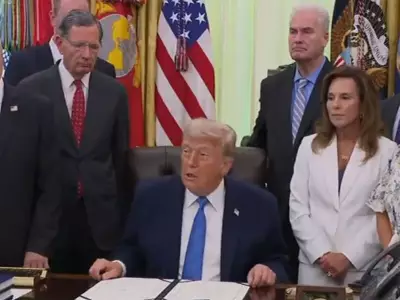
US President Donald Trump promoted the proposed accord in a post on Truth Social, describing it as a ‘Great Deal’ aimed at delivering stability across the region.
“This Great Deal will bring Peace and Security to the whole Region. Many presidents have tried to make Peace with Iran, and all have failed before me. The Leaders of the Region have, for the first time, found a President who can help them achieve real Peace,” the US president wrote.
Meanwhile, G7 leaders welcomed the emerging agreement between the United States and Iran during their summit in France.