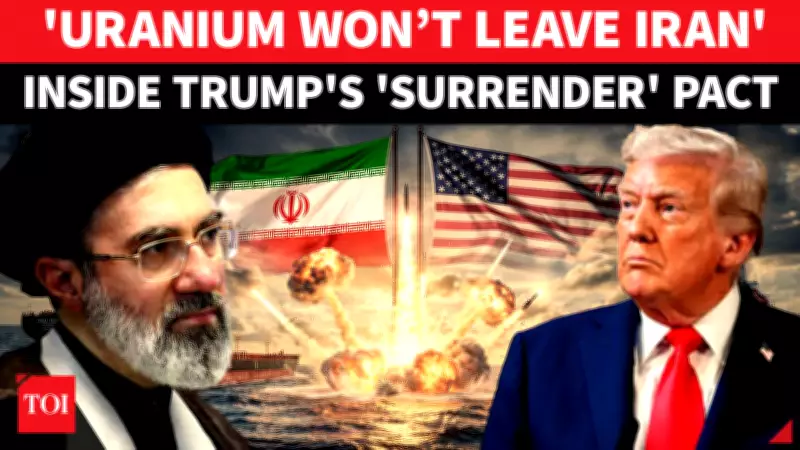
Donald Trump's controversial 14-point Iran deal is shaking up the Middle East. The agreement promises an end to hostilities, the reopening of the Strait of Hormuz, sanctions relief for Tehran, and a path toward a permanent settlement. But critics say the pact gives Iran major concessions, including allowing enriched uranium to remain in the country under international monitoring.
What Exactly Is in the Deal?
The 14-point plan outlines a comprehensive framework for de-escalation. Key points include a ceasefire between Iran and its regional adversaries, the resumption of oil shipments through the Strait of Hormuz, and the lifting of economic sanctions imposed by the United States. In return, Iran agrees to submit to rigorous international inspections of its nuclear facilities and to limit its enrichment activities to levels suitable for civilian energy production.
Clauses Causing Alarm in Israel
Israeli officials have expressed strong opposition to several clauses, particularly those that allow Iran to retain its enriched uranium stockpile under supervision. They argue this provides a pathway to a nuclear weapon and undermines regional security. Another contentious point is the lack of explicit restrictions on Iran's ballistic missile program, which Israel views as an existential threat.

Trump's Justification
Trump has called the deal a historic move that prevented a "nuclear holocaust." He claims the agreement is stronger than the 2015 Joint Comprehensive Plan of Action (JCPOA) because it includes provisions for snapback sanctions and addresses Iran's regional activities. Supporters argue it brings stability to the Persian Gulf and reduces the risk of a wider war.
Global Reactions
The deal has drawn mixed reactions worldwide. European allies have cautiously welcomed the diplomatic breakthrough but remain skeptical of Iran's compliance. Russia and China have endorsed the agreement, seeing it as a step toward reducing tensions. Meanwhile, Gulf Arab states are divided, with Saudi Arabia expressing concern over Iran's retained nuclear capabilities.
What Comes Next?
The implementation phase will be critical. International inspectors from the IAEA are expected to monitor Iran's compliance, and the US has vowed to reimpose sanctions if violations are detected. The path to a permanent settlement remains uncertain, but for now, the 14 points offer a fragile hope for peace.