

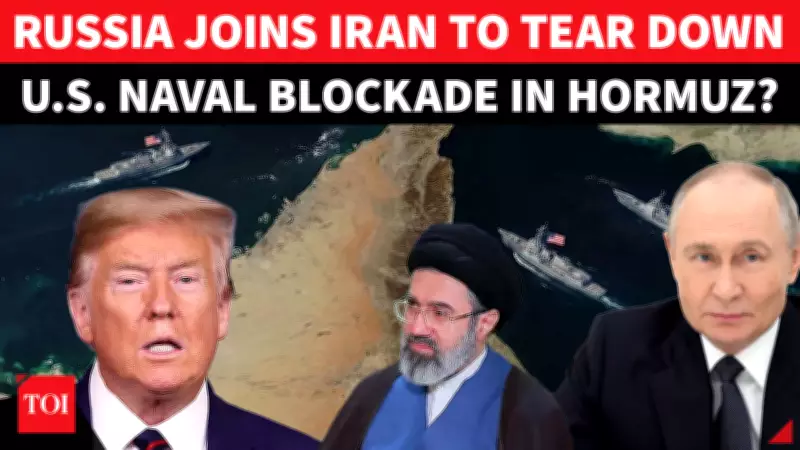
Russia Formally Enters Iran War? Lavrov Slams US Naval Blockade as Mideast Tensions Soar
In a dramatic escalation of Middle East tensions, Russia appears to be formally entering the Iran war, with Russian Foreign Minister Sergey Lavrov engaging in a high-stakes telephone conversation with his Iranian counterpart, Abbas Araghchi. This critical dialogue occurred immediately after former US President Donald Trump ordered a naval blockade against Iran, a move that has sent shockwaves across the region and beyond.
Lavrov and Araghchi Condemn US Actions
During the urgent call, Araghchi vehemently slammed Washington's blockade, labeling it as a reckless and dangerous maneuver. He warned that such aggressive actions not only jeopardize peace and security in the Middle East but also pose a significant threat to global stability. The Iranian official's strong words underscore the severe implications of the US strategy, which has already triggered widespread alarm among international observers.
In response, Lavrov issued a firm demand to the United States, urging it to demonstrate seriousness in advancing the diplomatic process aimed at restoring peace and security in the region. This statement marks a clear shift in Russia's stance, signaling its active involvement in the conflict and its alignment with Iran against US policies.

Background of the Crisis
The crisis erupted when Trump, in a bold and controversial decision, imposed a naval blockade on Iran. This action has been widely criticized as a provocative step that could ignite a full-scale war. The blockade has already led to a sharp increase in oil prices and heightened military posturing, with both sides preparing for potential confrontations.
Recent developments include:
- Trump mulling limited strikes on Iran after failed talks in Pakistan.
- Hezbollah launching missile and drone strikes on Israel, injuring two IDF soldiers.
- Iran issuing explosive warnings about the Strait of Hormuz, asserting it is non-negotiable.
- Pro-Iran Hezbollah's attack drones entering northern Israel, causing panic among residents.
These events have created a volatile environment, with the Middle East on edge and the international community closely monitoring the situation.
Implications for Global Security
The involvement of Russia in the Iran war adds a new dimension to the conflict, potentially drawing in other global powers and escalating it into a broader international crisis. Lavrov's intervention highlights Russia's strategic interests in the region and its willingness to challenge US dominance.
Key points to consider:
- The diplomatic process is at a critical juncture, with Russia demanding US commitment to peace talks.
- Iran's warnings of a forceful response if the blockade continues could lead to military clashes.
- The risk of a regional war spreading globally is now higher than ever, given the involvement of major powers.
As tensions mount, the world watches anxiously, hoping for a de-escalation through diplomatic channels rather than further military actions. The coming days will be crucial in determining whether peace can be restored or if the region will descend into full-blown conflict.






