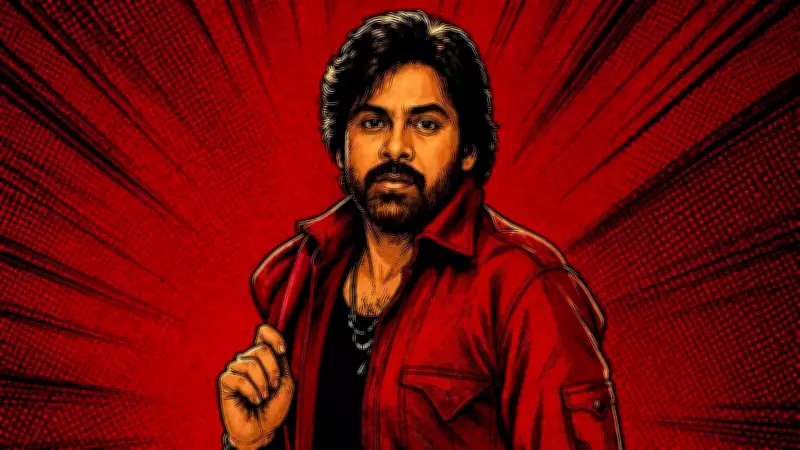
Long before he became Tollywood's 'Power Star,' Pawan Kalyan's energy was fueled by rebellion, rage, and a search for purpose. His raw anger even drew him to consider picking up the gun and joining the Naxal movement back in the 1980s. In an interview with ANI, the Andhra Pradesh Deputy Chief Minister gave a glimpse into those turbulent early years, reflecting on how he channeled youthful rage into spiritual reflection, completely altering his life's course and shaping the leader he is today.
'So intense was my rage during my teenage years that I almost became a Naxalite'
Between the ages of 17 and 21, Pawan was consumed by questions of social injustice and unrest. 'I even entertained getting into the Naxalite movement. At one point... I wanted to pick up the gun,' he revealed. The actor-politician explained that global and regional events of the era had a profound impact on his worldview. 'The South African apartheid struggle, the LTTE movement in Sri Lanka and its impact on Chennai, the Cold War reflections, unrest in a unified Germany, Khalistani militancy… all these things weighed heavily on my mind,' he said, adding that he was perhaps the most politically engaged member of his family. Pawan recalled attending janasabhas held by Naxals during those years, slipping into crowds where nobody recognized him. 'I had this mad rage. I was experimenting, but I was unhappy with all of it. I was frustrated and angry,' he said, adding, 'I also traveled to Mumbai for short-film festivals, explored documentary filmmaking, and read extensively in search of answers.'
'My late teens were defined by an intense, directionless rage against social injustice. I was so desperate for a cause to channel that energy that I seriously considered joining the Naxalite movement—believing that picking up a gun and starting a revolution was the only real way to fight the system.' – Pawan Kalyan
'My brother made me reconsider my responsibilities and my purpose in life'
Seeing the turmoil his younger brother was going through, Chiranjeevi challenged him with a simple question—one that would alter the course of his life and set him on a path of introspection. 'When I was struggling with all these thoughts, my brother Chiranjeevi stepped in and asked me one question: 'If your brother were not Chiranjeevi, and if your family depended on your salary and hard work, would you still make the same choice?'' Pawan recalled. The question left a lasting impression on him. 'I had no answer. I just kept quiet,' he said. 'That question stayed with me. It forced me to think about my anger, my responsibilities and the direction my life was taking. It made me look inward rather than outward. That was the beginning of a spiritual journey.'

'Following in my father's footsteps, I picked up Autobiography of a Yogi. I was immediately drawn to Tiger Swami, a man who fought tigers with his bare hands. His fearless discipline mirrored the war I was fighting within myself — an angry young man looking for a true purpose.' – Pawan Kalyan
'Trying to prove my brother wrong set me on the path to film industry'
As Pawan immersed himself in yoga and meditation, he found himself increasingly drawn towards a life of spiritual pursuit. Yet, a conversation with his brother would once again alter the course of his journey. 'One winter night, my brother called and stopped me. He introduced me to Rajeshwari Yogini, who guided me toward spiritual practices. She taught me a yoga technique, and I began to feel a deep meditative state within myself. After that, I visited Tirupati from time to time over a few months,' he recalled. The anger and confusion that had defined much of his youth gradually gave way to contentment. 'I experienced a deep sense of calm. I felt content and believed I no longer wanted anything from life,' he said. But just as he had earlier challenged Pawan's anger, Chiranjeevi now challenged his contentment. 'When I told him I was happy and needed nothing more, he said he would believe me only if I did something meaningful with my life,' he said. 'That challenge stayed with me and I wanted to prove him wrong.'

'Success didn't end my search for purpose'
Cinema gave Pawan a direction, but not necessarily the answers he had been searching for. 'I reached stardom around the age of 28 or 29, but despite the success, I felt a deep sense of emptiness. I continued my search for meaning through practices such as japas and vraths, but I realised there was still a lot of anger within me,' he said, adding, 'I tried expressing my political thoughts through films and songs, but it never felt like enough.' Over time, he came to believe that public life offered him a way to act on the convictions he had carried since his youth. 'Politics wasn't a career choice for me. It grew out of the questions I had been asking since my youth. I felt I owed it to myself to try and make an honest attempt to serve society,' he added.