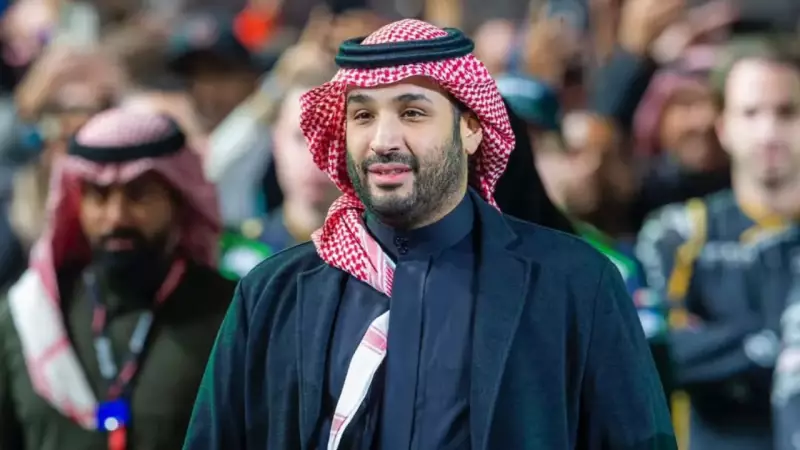
In 2025, Saudi Arabia's Crown Prince Mohammed bin Salman continues to capture global attention through an extraordinary combination of political influence and massive personal wealth. His position as one of the world's most powerful leaders is amplified by a lifestyle that blurs the lines between personal fortune and state authority.
The $25 Billion Fortune: Breaking Down MBS's Wealth
Mohammed bin Salman's estimated net worth stands at approximately $25 billion, according to financial analysts. This staggering figure represents a complex web of personal assets combined with strategic stakes in the House of Saud's extensive holdings. More significantly, his control over Saudi Arabia's key economic mechanisms provides financial reach that exceeds conventional billionaires.
The Crown Prince's authority extends over the Public Investment Fund, which boasts a valuation exceeding $700 billion. This control grants him financial influence that transcends traditional wealth measurements. Some conservative reports suggest a lower personal wealth figure of around $5 billion when considering only assets directly attributed to him, but most experts agree the higher estimate reflects his true financial capacity.

Extraordinary Acquisitions and Lavish Lifestyle
MBS's personal spending habits demonstrate his taste for the extraordinary and his virtually unlimited purchasing power. His most notable acquisitions have made international headlines and set new standards for luxury spending.
Among his most famous purchases is The Serene, a magnificent superyacht that previously belonged to a Russian vodka tycoon. The vessel cost an astonishing $500 million. Another landmark acquisition is the Chateau Louis XIV, a French palace designed in the style of Versailles, which he acquired for $300 million through intermediaries.
Perhaps his most celebrated art purchase remains Leonardo da Vinci's Salvator Mundi, which he secured for $450 million, making it the most expensive painting ever sold. The Crown Prince also maintains multiple private jets and extensive real estate portfolios across Europe, though many of these holdings are structured through shell companies or sovereign investment vehicles.
This method of acquisition through complex financial structures has attracted international scrutiny, highlighting the difficulty in distinguishing between personal and state-linked assets in autocratic monarchies.
Political Power and Social Reforms
Mohammed bin Salman's financial influence cannot be separated from his political authority. Since becoming Crown Prince in January 2015, he has accumulated significant governmental roles including First Deputy Prime Minister, Minister of Defence, and President of the Council for Economic and Development Affairs.
Under his leadership, Saudi Arabia has witnessed substantial social reforms that have transformed daily life in the kingdom. These include lifting the ban on female drivers, significantly expanding female participation in the workforce, opening the first Saudi sports stadium to women, and hosting public concerts featuring female performers.
Through these initiatives, MBS has consolidated power internally while simultaneously cultivating a global profile as a reformer. His control over state funds and national enterprises enables him to exercise influence that extends far beyond his personal wealth, creating a unique blend of governance and financial reach that few modern leaders can match.
Global Perception and Lasting Influence
In 2025, Mohammed bin Salman remains a figure of both admiration and controversy on the world stage. His wealth, often channeled through opaque financial structures, continues to raise questions about the separation between personal fortune and state assets in Saudi Arabia.
Yet this very combination of immense wealth and political power solidifies his position as one of the world's most influential contemporary leaders. He simultaneously functions as a reformer pushing changes within Saudi society, a collector of extraordinary luxury items, and a financier whose impact stretches far beyond his country's borders.

Between his estimated $25 billion fortune and his comprehensive political authority, Mohammed bin Salman continues to shape not only Saudi Arabia's future but also how the world perceives modern leadership in autocratic systems. His story represents the evolving nature of power in the 21st century, where financial capability and governmental control increasingly intertwine.