

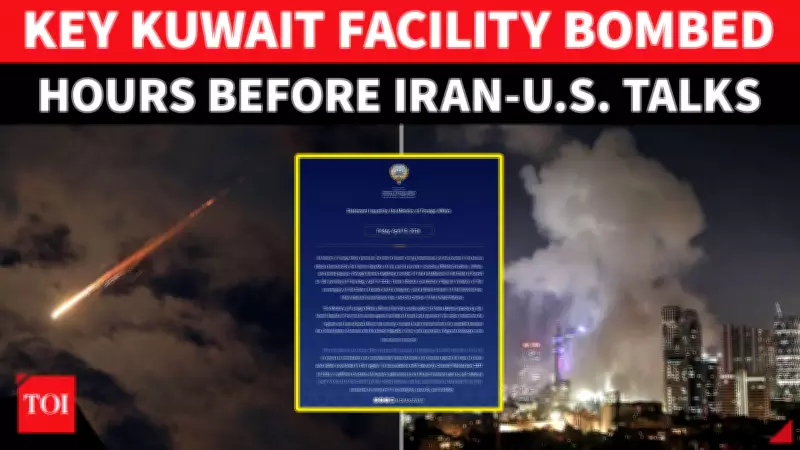
Kuwait National Guard Facility Targeted in Drone Strike Amid Regional Tensions
Kuwait has officially confirmed that a drone strike destroyed a National Guard facility, triggering air defense systems and raising significant alarm across the Gulf region. The incident, which occurred on April 10, 2026, has intensified geopolitical uncertainties as authorities directly blamed Iran and its proxy groups for violating Kuwaiti airspace.
Iran's Revolutionary Guards Issue Firm Denial
In response to the allegations, Iran's Islamic Revolutionary Guard Corps (IRGC) has categorically denied any involvement in the attack. This denial comes at a critical juncture, deepening the uncertainty surrounding the incident and complicating diplomatic efforts. The conflicting narratives between Kuwaiti authorities and Iranian military officials have created a volatile information environment.
Attack Occurs During Fragile Ceasefire Period
The drone strike unfolded during a particularly delicate phase of international relations, coinciding with a fragile ceasefire agreement between the United States and Iran. This timing has heightened fears of potential escalation, with security analysts warning that such incidents could unravel diplomatic progress and lead to broader regional conflict.

Gulf Nations on High Alert
Following the attack, Gulf nations have remained on high alert as drone and missile incidents continue to threaten regional stability. The persistent security challenges have prompted increased military readiness and coordination among allied states in the area.
Kuwait's Sovereign Response
Kuwaiti officials have issued a stern warning, indicating that the nation may take necessary measures to protect its sovereignty amid growing security risks. This statement underscores the seriousness with which Kuwait views the violation of its airspace and the direct threat to its national security infrastructure.
Broader Regional Implications
The attack on Kuwait's National Guard facility represents more than an isolated incident—it reflects the ongoing tensions that characterize Middle Eastern geopolitics. As drone warfare becomes increasingly prevalent in the region, such events test the resilience of ceasefire agreements and challenge international diplomatic frameworks.
The situation remains fluid, with regional powers closely monitoring developments and preparing for potential contingencies. The international community watches with concern as this incident adds another layer of complexity to an already tense regional landscape.






