

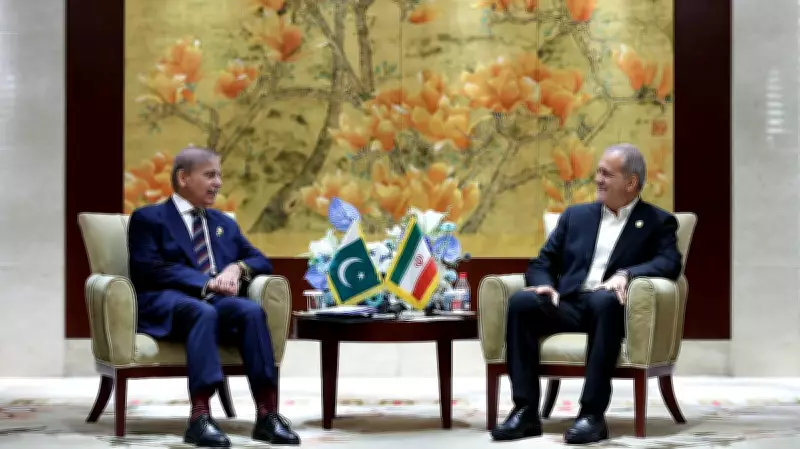
Iran's President Calls for Trust to Revive Middle East Peace Talks
In a significant diplomatic move, Iranian President Masoud Pezeshkian has underscored the critical importance of establishing trust to advance stalled peace negotiations in the Middle East. This message was delivered during a high-level meeting with Pakistan's Prime Minister Shehbaz Sharif, highlighting Iran's proactive stance in regional diplomacy.
Key Discussions on Regional Stability
The talks between President Pezeshkian and Prime Minister Sharif focused on enhancing bilateral relations and addressing broader regional challenges. Pezeshkian articulated that without mutual trust among involved parties, progress in Middle East peace efforts remains elusive. He emphasized Iran's commitment to fostering dialogue and cooperation as a pathway to stability.
Iran's diplomatic outreach comes at a time of heightened tensions in the Middle East, with ongoing conflicts and geopolitical rivalries complicating peace initiatives. By engaging with Pakistan, a key regional player, Iran aims to build consensus and momentum for renewed negotiations.

Implications for Middle East Diplomacy
This development signals Iran's intent to play a constructive role in regional peace processes, potentially opening doors for multilateral talks. The call for trust-building reflects a recognition of the deep-seated mistrust that has historically hindered diplomatic breakthroughs in the area.
- Iran seeks to position itself as a mediator in regional disputes.
- Trust is identified as a foundational element for successful negotiations.
- Pakistan's involvement could facilitate broader engagement from other Middle Eastern nations.
The meeting also touched upon economic and security cooperation between Iran and Pakistan, indicating a holistic approach to strengthening ties. Both leaders agreed on the necessity of collaborative efforts to address common challenges, including terrorism and economic development.
Challenges and Opportunities Ahead
While the emphasis on trust is a positive step, significant obstacles remain. Historical animosities, external influences, and divergent interests among Middle Eastern countries pose challenges to any peace initiative. However, Iran's proactive diplomacy, as demonstrated in this meeting, offers a glimmer of hope for revitalizing dialogue.
Observers note that sustained efforts and confidence-building measures will be essential to translate these discussions into tangible outcomes. The international community is closely watching these developments, as any progress in Middle East peace talks could have far-reaching implications for global security.






