

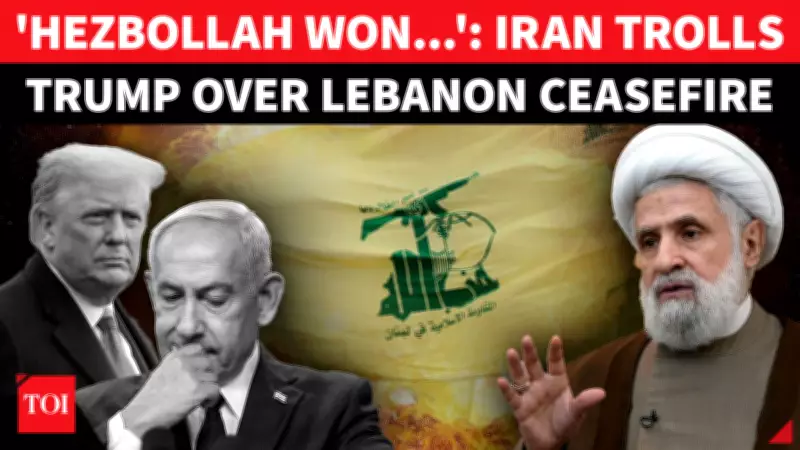
Iranian General Credits Hezbollah for Israel-Lebanon Ceasefire, Declaring a Strategic Victory
In a bold statement following the announcement of a ceasefire between Israel and Lebanon, a senior Iranian military leader has claimed that the truce was directly forced by Hezbollah's unwavering resistance. Esmaeil Qaani, the commander of the Islamic Revolutionary Guard Corps (IRGC) Quds Force, made these remarks to Iranian media, positioning Iran as a key player in the regional conflict resolution.
Hezbollah's Role in Negotiations and Ceasefire Demands
The ceasefire, which was publicly declared by former U.S. President Donald Trump, comes after intense negotiations where Iranian diplomats insisted on an end to hostilities with Hezbollah as a primary condition. It is important to note that Israel has not been engaged in direct combat with the Lebanese state but rather with Hezbollah, the Iran-backed militant group operating within Lebanon's borders.
Hezbollah itself issued a statement emphasizing that any ceasefire agreement must be comprehensive, covering all Lebanese territory, and should not permit any freedom of movement for Israeli forces. This demand underscores the group's strategic objectives and its influence over the terms of the truce.

Iran's Assertion of Influence and Regional Dynamics
General Qaani's comments highlight Iran's growing confidence in its regional proxy network, often referred to as the "Axis of Resistance." By taking credit for the ceasefire, Iran aims to bolster its geopolitical standing and demonstrate the effectiveness of its support for groups like Hezbollah in countering Israeli military actions.
The timing of this claim is significant, as it follows Trump's announcement and adds a layer of complexity to the international diplomacy surrounding the conflict. Analysts suggest that Iran's vocal victory declaration could impact future negotiations and the stability of the ceasefire, especially if Hezbollah or other Iranian allies perceive this as a green light for further assertive actions.
Broader Implications for Middle East Peace and Security
This development raises critical questions about the long-term sustainability of peace in the region. With Iran openly crediting Hezbollah's resistance for the truce, there is potential for increased tensions if either side violates the ceasefire terms. The situation also reflects the ongoing proxy warfare dynamics, where state actors like Iran leverage non-state groups to advance their interests without direct confrontation.
Furthermore, the ceasefire's collapse or success could influence other conflicts in the Middle East, setting precedents for how similar disputes are managed. Stakeholders, including the United States and European nations, will likely monitor Hezbollah's compliance and Iran's continued involvement closely, as these factors are pivotal to ensuring a durable peace.
In summary, the Iranian general's claim not only celebrates a perceived victory but also signals Iran's intent to maintain a prominent role in shaping the Middle East's security landscape through its alliances and military strategies.






