

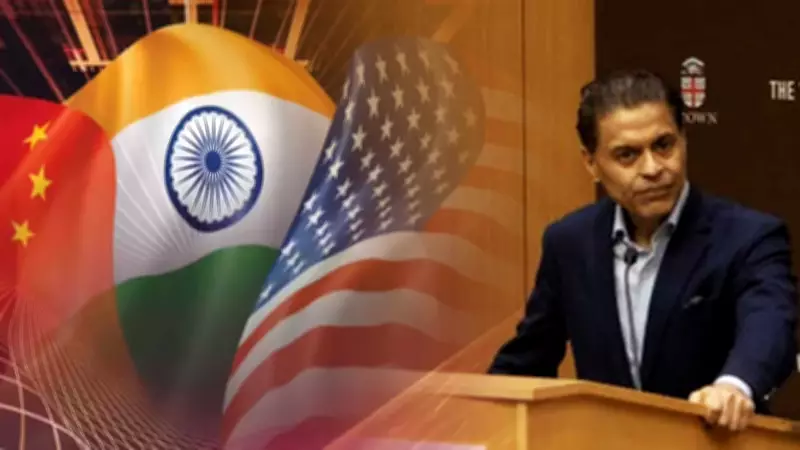
Fareed Zakaria's Bold Declaration: India Positioned to Replace China in Global Manufacturing Landscape
In a striking analysis of evolving global economic dynamics, prominent US-based journalist and political commentator Fareed Zakaria has made a significant statement regarding the shifting balance of power. Speaking at an international forum, Zakaria asserted that India is actively replacing China as a primary manufacturing base for the United States, marking a profound transformation in global supply chains and economic relationships.
The Driving Forces Behind India's Ascendancy
Zakaria highlighted several critical factors contributing to India's emerging role as a manufacturing powerhouse. The nation's unique ability to combine abundant low-cost labor with a rapidly growing pool of high-end technical talent creates a competitive advantage that is increasingly attractive to international corporations. This dual capability allows India to compete effectively in both traditional manufacturing sectors and advanced technological production.
India's expanding involvement in smartphone manufacturing serves as a prominent example of this shift. Major global technology companies are increasingly establishing and expanding production facilities within India, drawn by the country's improving infrastructure, favorable government policies, and skilled workforce. Simultaneously, India's burgeoning digital innovation ecosystem is reshaping global perceptions of its technological capabilities and economic potential.

Strategic Advantages Beyond Economics
Beyond pure economic factors, Zakaria emphasized India's democratic political structure as a significant strategic advantage in the current global climate. As geopolitical tensions between Western nations and China continue to escalate, India's alignment with democratic values and its strengthening partnerships with Western countries enhance its appeal as a reliable manufacturing alternative. This political dimension adds a layer of stability and predictability that many multinational corporations find increasingly valuable when making long-term investment decisions.
Challenges and Considerations in India's Path Forward
While presenting an optimistic outlook for India's global economic role, Zakaria also offered a balanced perspective by acknowledging internal challenges that could impact the nation's trajectory. He specifically noted the importance of maintaining India's pluralistic social fabric and addressing domestic issues that could potentially hinder sustained economic growth. These considerations remind observers that India's rise, while promising, requires careful navigation of complex internal dynamics alongside external opportunities.
The broader context of this assessment involves significant recalibrations in global supply chains, as many nations and corporations seek to diversify manufacturing dependencies away from China. This trend, accelerated by trade tensions and geopolitical considerations, creates openings for alternative manufacturing hubs like India to capture substantial portions of global production.
The Global Implications of This Economic Transition
Zakaria's statement reflects a growing consensus among international analysts that we are witnessing a fundamental reconfiguration of global economic power structures. As India strengthens its manufacturing capabilities and deepens its integration into Western-oriented supply chains, the traditional dominance of China in global production faces increasing competition. This shift carries implications for international trade patterns, diplomatic relationships, and the balance of economic influence across continents.
Ultimately, Zakaria's analysis suggests that India's moment on the global economic stage has arrived with substantial momentum. The central question moving forward concerns not whether India will assume a more prominent role in global manufacturing, but rather the extent to which it can capitalize on this opportunity and overcome internal challenges to realize its full potential as a leading economic power in the 21st century.






