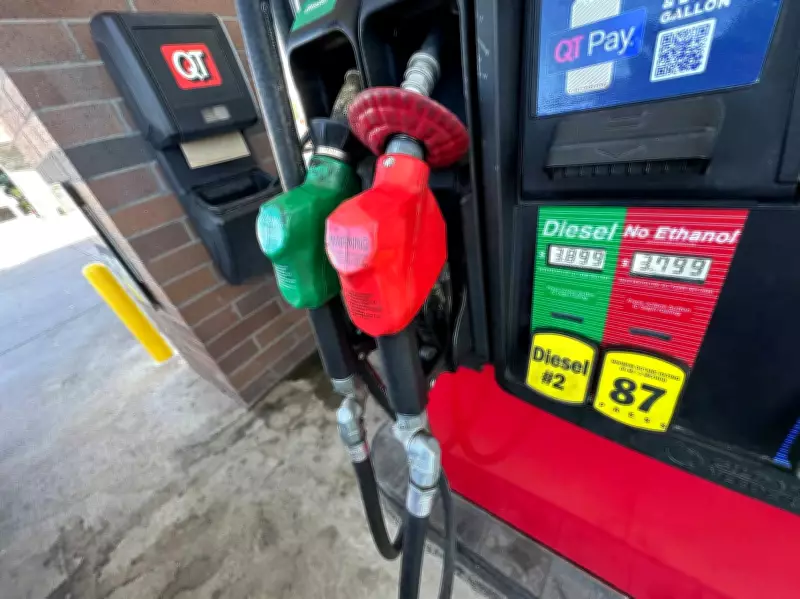
Global Economies Grapple with Energy Crisis as Middle East Conflict Enters Second Month
A full month into the escalating Middle East conflict, the economic ripple effects are spreading across continents with alarming intensity. The crisis, triggered on February 28 by joint United States and Israel strikes against Iran, has dramatically tightened Tehran's control over the strategically vital Strait of Hormuz, creating what experts describe as the most significant energy disruption in modern history.
The World's Most Critical Energy Chokepoint
This narrow maritime passage, connecting the Persian Gulf with the Gulf of Oman and Arabian Sea, represents one of the planet's most crucial energy arteries. At its narrowest point, the strait spans just 29 nautical miles with severely limited navigable channels for shipping traffic. Daily, approximately 20 million barrels of oil traverse these waters, accounting for nearly one-quarter of all global seaborne trade. Any disruption here sends shockwaves through international markets, forcing nations worldwide to implement emergency measures while attempting to cushion consumers through varied policy responses.
Asia's Response to Mounting Pressure
Vietnam has taken decisive action to protect its citizens from the energy price surge. Facing dramatic spikes in fuel costs, Vietnamese authorities suspended environmental protection taxes on petrol, diesel, and aviation fuel until mid-April. The trade ministry characterized this move as "an urgent and effective solution to stabilize the petroleum market and ensure national energy security amidst the escalating conflict in the Strait of Hormuz." The intervention produced immediate results, with petrol prices dropping approximately 26% and diesel falling more than 15% following earlier dramatic increases.

India has implemented a comprehensive strategy to shield both consumers and corporations from the ongoing energy supply crisis. With refining costs climbing sharply, the government reduced excise duty on petrol and diesel by Rs 10 per litre each, despite significant impacts on state revenues. Simultaneously, export duties were introduced on diesel and aviation turbine fuel to manage domestic supply pressures. Officials maintain there is no shortage of petrol, diesel, or LPG, dismissing disruption claims as a "coordinated misinformation campaign." Domestic LPG availability remains stable with increased production and expanded commercial distribution networks.
Pakistan faces mounting pressure from rising fuel costs, with the government implementing selective price adjustments while attempting to shield consumers. Kerosene prices increased by PKR 4.66 per litre to PKR 433.40 effective March 28, while petrol and diesel rates remain unchanged at PKR 321.17 and PKR 335.86 per litre respectively. Authorities explained this decision aims to protect consumers from global price volatility, with the state absorbing part of the burden through payments of PKR 95.59 per litre on petrol and PKR 203.88 per litre on diesel to oil marketing companies.
Meanwhile, aviation fuel prices have surged dramatically, increasing for the fifth time in just 28 days. A latest hike of PKR 5 per litre has pushed jet fuel to a record PKR 476.97 per litre, up from PKR 188 at March's beginning—a staggering increase of PKR 288. Airlines have already raised fares substantially, with domestic one-way tickets on routes like Karachi-Islamabad and Karachi-Lahore reaching up to PKR 40,000, while "chance seat" fares have surged by as much as 150%.
Middle Eastern and South Asian Adjustments
Egypt has introduced a series of temporary restrictions to reduce energy consumption as fuel costs escalate dramatically. Retail outlets, restaurants, and cafes must now close by 21:00 each night, accompanied by measures including reduced street lighting and limited remote working options. The government termed these "exceptional measures" in response to mounting pressure on energy supplies. Egyptian Prime Minister Mostafa Madbouly revealed the country's petrol expenditure has more than doubled in recent months. While tourism-related businesses receive exemptions, the broader economy feels significant strain due to heavy reliance on imported fuel.

Sri Lanka is tightening energy consumption as supply disruptions continue straining the nation's fuel system. With approximately 60% of its energy imported and limited reserves covering barely one month, authorities have reintroduced a QR-based rationing system. Weekly limits include eight litres for motorcycles, 20 for tuk-tuks, 25 for cars, 100 litres of diesel for buses, and 200 for lorries. Fuel prices have risen about 33% since the conflict began, adding substantial pressure on households.
To further curb consumption, the government implemented a no-work-on-Wednesday policy, closing offices and schools each week. Beyond fuel shortages, Sri Lankan citizens confront disrupted fertilizer supplies that could push food prices approximately 15% higher, compounding the already severe cost-of-living crisis.
Latin American Energy Challenges
Venezuela faces dual pressures from the global energy crisis and domestic climate conditions. Prolonged high temperatures have intensified pressure on an already strained power system, prompting the government to scale back economic activity. Interim President Delcy Rodriguez announced a week-long suspension of work across the public sector, including education, as part of an electricity-saving initiative. "During this Holy Week, I want to announce that I have decreed days off on Monday, Tuesday, Wednesday, Thursday and Friday for the entire education sector," she stated, noting the country has endured "45 days of high temperatures." While essential services remain operational, this measure reflects ongoing challenges in managing electricity demand amid global energy market turmoil.
Global Work Pattern Adjustments
Across affected nations, work patterns are adapting in response to energy constraints. From shortened business hours to mandated remote work reductions and even complete weekly shutdowns, countries are implementing creative solutions to manage fuel consumption. These measures form part of broader national responses to what Vietnamese officials have termed "the biggest energy bottleneck ever" created by Strait of Hormuz tensions.
As the Middle East conflict enters its second month, the interconnected nature of global energy markets becomes increasingly apparent. From Asia to Latin America, governments balance emergency interventions with long-term energy security planning, while consumers worldwide face the tangible consequences of geopolitical tensions thousands of miles away.