

European Companies Urge Caution on EU's Rapid Tech Sovereignty Drive
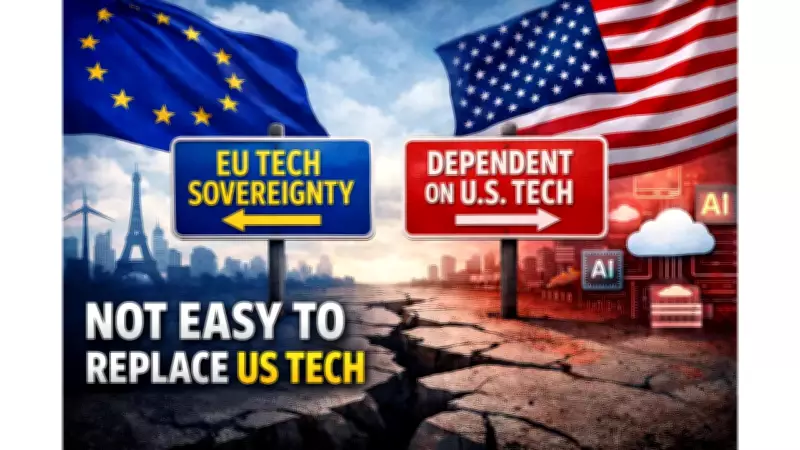
Major European corporations have issued a stark warning to the European Union regarding its ambitious push for "tech sovereignty," arguing that a rapid reduction in reliance on American technology providers could severely disrupt business operations and undermine competitiveness. According to a report by the Financial Times, companies across critical sectors including banking, manufacturing, and technology have expressed concerns that their deep dependence on US platforms cannot be easily or quickly replaced without significant operational fallout.
Business Leaders Highlight Practical Challenges
Ilse Henne, CEO of supply chain manager Thyssenkrupp Material Services, stated bluntly, "In Europe today we are not truly in the position to substitute all our IT solutions with European solutions." She emphasized that shifting away from established US providers would require massive investment and sustained political support. Executives from leading European technology and infrastructure firms such as ASML, Ericsson, and Capgemini have echoed these concerns, cautioning against protectionist measures that could inflate costs and slow down vital investment.
Many businesses argue that policymakers are underestimating the immense practical challenges involved. Replacing digital systems built on US platforms would necessitate retraining employees, rewriting software, renegotiating contracts, and managing inevitable operational disruptions. Commerzbank noted that the "range, quality and technological maturity of services" offered by giants like Microsoft and Google are currently available only to a "limited extent" within the European market, making the benefits of using these providers outweigh the perceived risks for now.

The Global Competition and "Kill Switch" Concerns
The warnings come at a time when European industries are already grappling with intense competition from China, high energy prices, and uncertainty in transatlantic trade. Francesca Musiani of the French National Centre for Scientific Research pointed out that multinational companies have spent decades building their processes, productivity, and sometimes entire business models on "tech bricks that come from the US." In a global competitive landscape, any operational slowdown could directly translate to lost market share.
Discussions around technology sovereignty have also revived fears of a hypothetical "kill switch" scenario, where the US government could compel American tech companies to suspend services to European customers through sanctions or export controls. While many executives consider this unlikely, it has become a topic in boardrooms and government meetings, adding to the urgency of the debate.
EU's Sovereignty Push and Industry Responses
The European Commission is expected to present a comprehensive "tech sovereignty package" next month, aimed at expanding sovereign cloud services and strengthening Europe's independence in software technologies. This initiative is partly driven by concerns that former US President Donald Trump's foreign policy could accelerate a "tech decoupling" between the US and Europe.
In response, US technology companies have sought to reassure European clients, proposing sovereign cloud offerings and partnerships with local firms. Deutsche Telekom, for instance, stated it is "actively promoting sovereignty" through platforms like T Cloud Public and Industrial AI Cloud, while acknowledging continued reliance on foreign technologies.
Calls for Strategic Balance and Future Focus
Some European policymakers and analysts suggest a more nuanced approach. A German government official described the issue as a "trade-off" between sovereignty and competitiveness, urging companies to focus on "applying the best available AI models over the next three to four years" to stay competitive globally. Industry groups, such as the Computer & Communications Industry Association, warn that Europe's push should not lead to "digital solitary confinement," which could cut the region off from global innovation.

Martin Hullin of the Bertelsmann Stiftung advised against Europe falling into a "hyperscaler trap" by attempting to replicate Silicon Valley giants. Instead, he advocated for building broader technology ecosystems to support future innovation. The consensus among many business representatives is that Europe should first address structural challenges—like strengthening the single market, reducing regulatory complexity, and expanding access to capital—to help local technology alternatives develop sustainably.





