

Wargame Simulation Highlights Europe's Strategic Vulnerability to Russian Aggression
A newly released wargame has sent shockwaves through European security circles, revealing a stark reality: Europe may be dangerously unprepared for a potential Russian attack. The simulation, conducted by Germany's Die Welt newspaper in collaboration with the German Wargaming Center, paints a concerning picture of NATO's defensive capabilities at a time when American disengagement is creating strategic uncertainties.
Shifting Timelines and Growing Concerns
European security officials have dramatically revised their estimates of when Russia might pose a direct threat to NATO territory. Where previously analysts believed Russia wouldn't be capable of threatening NATO until 2029 or later, there's now growing consensus that such a crisis could arrive much sooner. This accelerated timeline comes as Russia has fully transitioned to a war economy, pouring national resources into rearmament and military recruitment that far exceeds the needs of its campaign in Ukraine.
"Our assessment is that Russia will be able to move large amounts of troops within one year," stated Netherlands Defense Minister Ruben Brekelmans in a recent interview. "We see that they are already increasing their strategic inventories, and are expanding their presence and assets along the NATO borders."

The Baltic Flashpoint Scenario
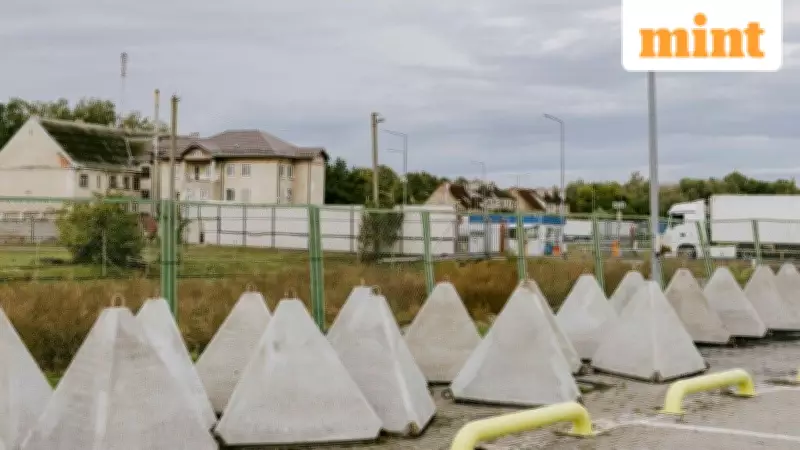
The wargame focused on a particularly vulnerable region: the Baltic states. In the simulation set in October 2026, Russia used the pretext of a humanitarian crisis in its Kaliningrad exclave to seize the Lithuanian city of Marijampole—a strategic crossroads between Russia and Belarus. What made the scenario particularly alarming was how Russia achieved its objectives with relatively limited forces, deploying only about 15,000 troops to establish domination over the Baltics.
"The Russians achieved most of their goals without moving many of their own units," observed Bartłomiej Kot, a Polish security analyst who participated in the exercise. "What this showed to me is that once we are confronted by the escalatory narrative from the Russian side, we have it embedded in our thinking that we are the ones who should be de-escalating."
NATO's Decision-Making Dilemma
The wargame exposed critical weaknesses in NATO's collective decision-making process. In the simulation, Russian portrayals of the invasion as a humanitarian mission proved sufficient to prevent the United States from invoking NATO's Article 5, which calls for allied assistance. Germany appeared indecisive, while Poland, despite mobilizing, didn't send troops across the border into Lithuania.
"Deterrence depends not only on capabilities, but on what the enemy believes about our will," explained Franz-Stefan Gady, a military analyst who played the Russian chief of general staff in the exercise. "In the wargame my 'Russian colleagues' and I knew: Germany will hesitate. And this was enough to win."
Diverging Assessments Within NATO
European officials express varying assessments of the immediacy of the Russian threat. Some point to Russia's struggles in Ukraine, where President Vladimir Putin has been bogged down in a costly war of attrition. "Putin has failed in virtually everything he set out to do," noted Finnish President Alexander Stubb. "He hasn't even attempted to come to NATO because he is not succeeding in Ukraine. So don't overestimate Russian capacity."
However, other analysts warn against complacency. Even without a peace agreement in Ukraine that the Trump administration is pushing, the Russian military could instantly free up as many as 200,000 battle-hardened troops simply by switching from offensive operations to holding defensive positions. This number exceeds what Putin used for the initial full-scale invasion of Ukraine in 2022.

Hybrid Warfare and Gray Zone Tactics
The wargame highlighted Russia's sophisticated use of hybrid warfare tactics. Alexander Gabuev, director of the Carnegie Russia Eurasia Center in Berlin who played Putin in the exercise, emphasized how the "humanitarian" intervention smokescreen proved crucial to enabling Russian conquest. "It was very helpful to keep beating the drum that we need the humanitarian corridor because the evil Lithuanians are preventing us from supplying the poor and hungry people of Kaliningrad."
Dutch Defense Minister Brekelmans warned about the expanding "gray zone" of conflict: "There is a gray area, and as Russia is taking additional steps, the gray zone is becoming darker. At the end, it is up to the NATO ally affected, and the 31 other NATO allies, to decide whether the Article 5 line has been crossed."
European Response and Preparation
Despite the concerning scenario presented in the wargame, European officials emphasize their ongoing preparations. Lithuania's national security adviser Deividas Matulionis stated, "Anxiety is very visible in my country, but at the same time, we are preparing to defend ourselves." He added that while Lithuania expects U.S. and NATO assistance in case of Russian incursion, the country's own troops "will be fighting, definitely, even before the reinforcements come."
Rear Admiral Giedrius Premeneckas, Lithuania's chief of defense staff, offered a more optimistic assessment of real-world capabilities: "We are very thankful to the Ukrainians who, every day, with their blood and their losses are giving us time to prepare better. We are using this time wisely because we know that, if there is a deal in Ukraine, Russia will accelerate its war machine."
The commander of German land forces, Lieutenant General Christian Freuding, declared during a visit to Lithuania that Germany and its allies "are ready for the fight tonight, whatever it takes," even as NATO intelligence continues to assess that Russia wouldn't be able to act against alliance members until 2029.
As Europe grapples with these conflicting assessments and strategic challenges, the wargame serves as a sobering reminder that the continent's security architecture faces unprecedented tests from a resurgent Russia operating in an increasingly complex geopolitical environment.





