

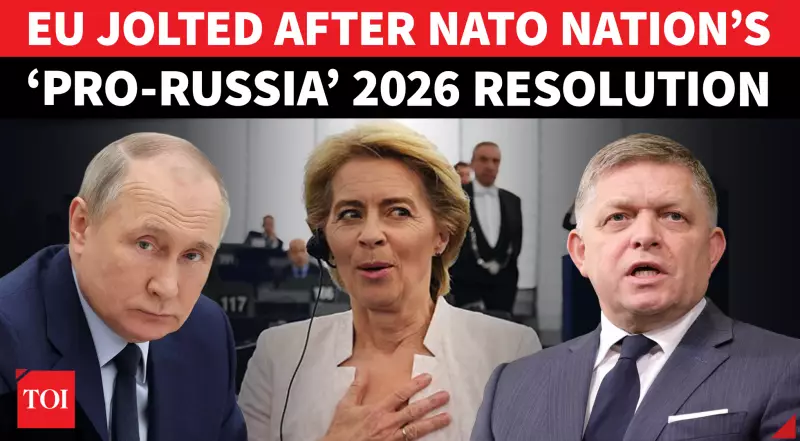
Europe's political landscape was jolted at the start of 2026 after the Prime Minister of Slovakia, Robert Fico, used his New Year's address to launch a stunning attack on the European Union. His remarks, widely seen as sympathetic to Russia, have sent shockwaves through the NATO alliance and signalled a dramatic break from the Western consensus on the war in Ukraine.
A Defiant Declaration Against EU 'Blind Obedience'
In a defiant national broadcast on January 1, 2026, the leader of the NATO nation declared an end to what he termed as "blind obedience" to European Union elites. Prime Minister Fico accused EU leadership of cold calculation and moral bankruptcy in their handling of the ongoing conflict in Ukraine. He expressed profound dismay at the casual manner in which European leaders discuss casualties, stating he was appalled by their ease.
Fico's speech took a sharply critical view of the war's human cost, condemning what he described as the senseless killing of both Ukrainians and Russians. This framing, which places equal moral weight on both sides, directly challenges the prevailing narrative in Brussels and most Western capitals, which holds Russia solely responsible for the aggression and ensuing bloodshed.

Reactions and the Rift Within NATO
The immediate aftermath of the address has been one of alarm and condemnation from Slovakia's traditional allies. The speech, delivered alongside a 2026 resolution that jolted EU partners, is seen as the clearest signal yet of a deepening political fissure within the North Atlantic Treaty Organization. It has reignited simmering tensions about unity and strategic direction within the military bloc.
Analysts suggest Fico's rhetoric provides a significant propaganda boost to the Kremlin, undermining the carefully coordinated Western response to Russian President Vladimir Putin's invasion. By questioning the moral foundation and strategic wisdom of EU support for Kyiv, the Slovak leader has given voice to a minority but growing sentiment of war fatigue and scepticism in certain European quarters.
What This Means for Europe's Future
The long-term consequences of this diplomatic earthquake are still unfolding. Slovakia, under Fico's government, may now pursue a more independent and Russia-engaging foreign policy, potentially blocking or diluting further EU-wide sanctions or military aid packages for Ukraine. This move challenges the very principle of European solidarity that has been the cornerstone of the response to the war.
The event highlights a crucial vulnerability for the West: maintaining a united front requires constant political effort, and leaders like Fico can exploit domestic grievances to fracture international consensus. As 2026 begins, the episode serves as a stark reminder that the battle for Europe's political soul is being fought not just on Ukrainian battlefields but also in the council chambers and television addresses of its member states.






