

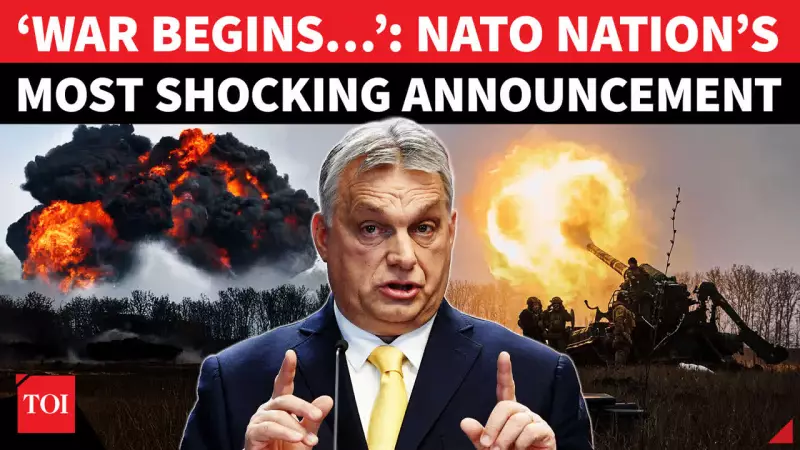
NATO's War Kicks Off: EU Heavy-Hitter Makes Urgent Announcement As Russia Goes All-Out
Europe finds itself on a razor's edge as a top NATO leader delivers an urgent and alarming warning, coinciding with Russia's intensification of its military offensive in Ukraine. The situation has escalated to a critical point, prompting high-level statements that underscore the gravity of the geopolitical crisis unfolding across the continent.
Viktor Orbán's Stark Declaration: Europe Already at War
Hungary's Prime Minister Viktor Orbán, a prominent and often controversial figure within the European Union, made a dramatic announcement that has sent shockwaves through diplomatic circles. In a forceful statement, Orbán declared, "Europe is not going to war — it's already at war." This bold assertion directly challenges the narrative of a contained conflict and highlights the deepening involvement of European nations in the Ukraine crisis.
Orbán did not mince words in his criticism, accusing NATO of actively escalating the Ukraine conflict through its policies and support. His remarks expose significant fractures within the European alliance, revealing a growing divide over how to respond to Russia's aggressive actions. The Hungarian leader's perspective adds a layer of complexity to the unified front that many EU and NATO members have sought to present.

Economic Realities and Diplomatic Tensions
In addition to his stark war declaration, Prime Minister Orbán addressed the economic dimensions of the conflict. He slammed Kyiv's recent demand for $1.5 trillion in financial aid from the European Union, labeling it as unrealistic and unsustainable. Orbán warned of severe economic fallout for European nations if such massive financial commitments are pursued, emphasizing the need for pragmatic solutions amid already strained budgets.
The diplomatic rift widened further as Orbán directed criticism towards Ukrainian leadership. He called President Volodymyr Zelensky "disrespectful," a comment that underscores the personal and political tensions simmering beneath the surface of international diplomacy. This public rebuke not only strains Hungary-Ukraine relations but also signals potential challenges in maintaining cohesive European support for Kyiv.
Broader Implications for European Security
The urgent announcement from Hungary's prime minister comes at a time when Russia has ramped up its military operations, adopting an all-out approach that has heightened fears across Europe. Orbán's warning serves as a sobering reminder of the continent's vulnerability and the high stakes involved in the ongoing conflict.
As tensions continue to spiral, the deepening fractures within Europe that Orbán's statements reveal could have far-reaching consequences for:
- NATO cohesion and strategic decision-making
- European Union unity in responding to external threats
- Economic stability amid wartime pressures and reconstruction demands
- Diplomatic efforts to resolve the conflict through negotiation
The situation remains fluid and volatile, with Orbán's urgent announcement marking a significant moment in Europe's confrontation with the realities of modern warfare on its doorstep. As Russia continues its offensive, the responses from European leaders like Orbán will shape not only the immediate conflict but also the future of continental security architecture.






