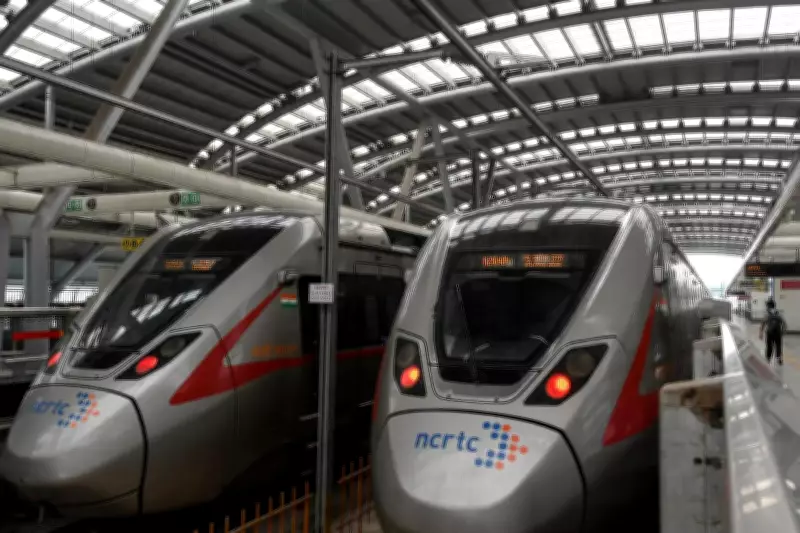
The Delhi-Ghaziabad-Meerut Namo Bharat corridor has achieved a remarkable milestone by surpassing three crore passenger journeys within months of its full commissioning, underscoring its swift emergence as a favored mode of regional transportation in the National Capital Region (NCR).
Inauguration and Ridership Growth
Prime Minister Narendra Modi officially inaugurated the corridor on February 22, 2026, alongside the Meerut Metro. Since then, ridership has witnessed a sharp and consistent upward trend. Officials report that weekday daily footfall ranges between 90,000 and 114,000 passengers, while Sundays see approximately 85,000 commuters.
Operations on the corridor initially began on October 21, 2023, with a 17-kilometer priority stretch connecting Sahibabad and Duhai Depot. During the first month, ridership stood at over 72,000. As the network expanded in phases—reaching Modinagar North in March 2024 and Meerut South in August 2024—ridership steadily increased. By December 2024, monthly passenger numbers had climbed to around 700,000.

Major Boost from Delhi Section
A significant enhancement came in January 2025 with the commissioning of a 13-kilometer Delhi section from New Ashok Nagar to Sahibabad, improving connectivity through key hubs such as Anand Vihar. By May 2025, the system had recorded one crore journeys, with ridership nearly doubling to approximately 1.5 million monthly riders by July. Following the completion of the final 26-kilometer stretch in February 2026, ridership accelerated further. In March 2026, it reached nearly 2.7 million, and the system crossed the three-crore mark in under five months after achieving two crore trips.
Reasons for Growth
Officials attribute this growth largely to significant travel time savings. An official statement from the National Capital Region Transport Corporation (NCRTC) noted, “Commuters can use the Namo Bharat Connect app for QR-based ticketing and real-time train tracking, reducing the need to queue at stations. Digital integration with the mobile applications of DMRC and IRCTC has enabled end-to-end journey planning between Delhi Metro, Namo Bharat, and railways.”
The corridor's success highlights the increasing demand for efficient regional transit solutions in the NCR, with digital tools playing a crucial role in enhancing user convenience.