

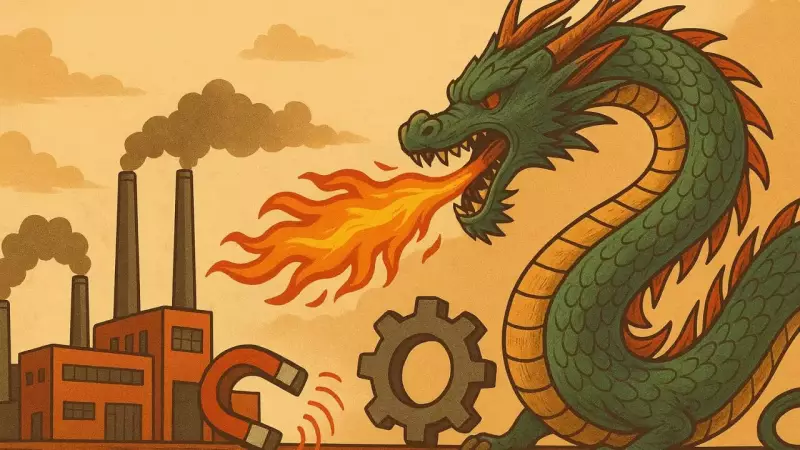
In a bold move to secure its technological future, Europe is digging deep—literally and figuratively—to reduce its heavy reliance on China for critical metals. The continent's strategy isn't just about finding new mines; it's about tapping into resources already within its borders, leading to one of the world's most dramatic urban transformations in the frozen far north of Sweden.
The Great Move: A City on the Shift
The ripple effects of Europe's mineral hunger are being felt 145 kilometers north of the Arctic Circle. The city of Kiruna, home to thousands, is being physically relocated about three kilometers to the east. This monumental project, described as one of the planet's most radical urban makeovers, is a direct consequence of ground subsidence caused by the expansion of a massive underground iron ore mine.
Jennie Sjöholm, a senior lecturer at Sweden’s University of Gothenburg, captured the city's unique paradox in a CNBC interview. She noted that while Kiruna may seem exotic to outsiders, it faces familiar small-town struggles, particularly its deep dependence on a single corporate entity.

Mining for Independence: The Rare Earths Rush
Why is this remote city so crucial? Rare earth minerals are a group of 17 metals that are the unsung heroes of modern life. They are absolutely essential for manufacturing:
- Smartphones and consumer electronics
- Electric vehicles (EVs)
- Wind turbines for renewable energy
- MRI scanners and other medical equipment
For over a century, Kiruna has been the heart of Sweden's iron ore industry, founded 125 years ago around the state-owned LKAB's operations. Today, it's not just a mining town; it's a significant European space hub. LKAB alone accounts for 80% of all iron ore mined in the European Union. Recently, the company made a game-changing discovery: one of Europe's largest known deposits of rare earth elements, positioning it as a key player in the continent's green transition.
A "Huge Project" with Continental Stakes
The relocation is more than a local issue; it's a strategic European endeavor. Mats Taaveniku, chairman of the Kiruna municipal council, called it a "huge project" with the potential to create major opportunities for Europeans for decades. He emphasized that success could unlock greater financial and political backing from both the Swedish government and the European Union.
However, the path is not without friction. Taaveniku revealed ongoing tensions, stating, "We have what we can call a big fight between the municipality and LKAB, and the municipality and our own government." This underscores the complex balance between local community needs, corporate interests, and national strategic goals.
The ultimate aim is clear: to help break China's long-held dominance over the global supply of these critical minerals. By developing its own rare earth resources and infrastructure, Europe hopes to build a more resilient, self-sufficient supply chain for the technologies that will power its economy and climate goals. The moving of an entire Arctic city stands as a powerful testament to the high stakes involved in this global resource race.






