

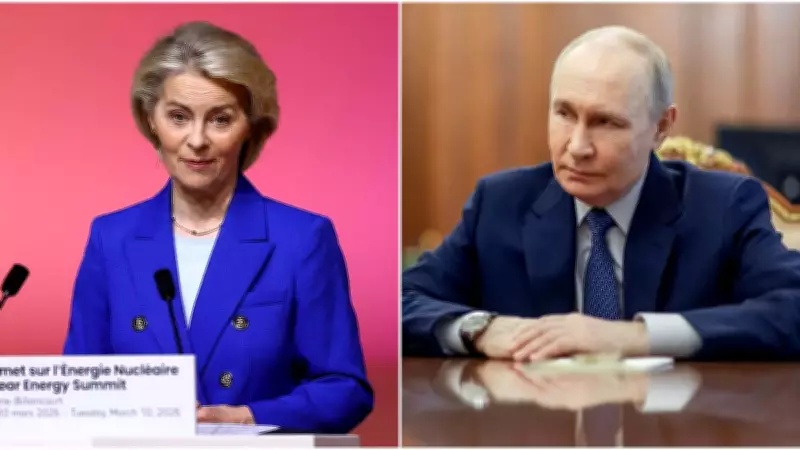
EU President Issues Stark Warning on Russian Oil Purchases Amid Iran Conflict
European Union President Ursula von der Leyen has delivered a clear and forceful message to European nations, stating that purchasing Russian oil during the ongoing conflict involving Iran would constitute a significant strategic blunder. This warning comes at a critical juncture as geopolitical tensions escalate and energy security concerns mount across the continent.
Putin's Offer to Resume Energy Supplies to Europe
Russian President Vladimir Putin has publicly acknowledged the severe energy crisis affecting Europe and has explicitly stated his readiness to resume oil and gas supplies to European nations. This announcement marks a potential shift in energy diplomacy, as Europe has been grappling with supply disruptions and soaring prices. Putin's overture is seen by some as an attempt to leverage Europe's energy dependency amid global instability.
However, von der Leyen's response underscores the complex geopolitical calculations at play. She emphasized that turning to Russian energy sources while conflicts, particularly involving Iran, are unfolding would undermine Europe's strategic autonomy and long-term security interests. The EU President highlighted that such a move could inadvertently strengthen Russia's geopolitical influence at a time when Europe needs to assert its independence and solidarity.

The Broader Context of the Iran War and European Energy Strategy
The conflict involving Iran has introduced new layers of complexity to global energy markets and international relations. Europe, which has historically relied on diverse energy imports, faces heightened risks of supply chain disruptions and price volatility. In this volatile environment, von der Leyen's warning serves as a reminder of the importance of diversifying energy sources and reducing dependency on potentially unstable or adversarial suppliers.
The EU's stance reflects a broader strategy to enhance energy resilience through:
- Accelerating the transition to renewable energy sources
- Strengthening partnerships with reliable energy-producing nations
- Investing in energy infrastructure and storage capabilities
- Implementing policies to reduce overall energy consumption
Implications for European Policy and International Relations
Von der Leyen's statement is likely to influence upcoming EU discussions on energy policy and foreign relations. It signals a firm commitment to prioritizing strategic interests over short-term energy needs, even in the face of economic pressures. This approach aligns with the EU's efforts to maintain a unified front in global affairs and uphold principles of sovereignty and security.
As the situation evolves, European leaders will need to balance immediate energy demands with long-term strategic goals. The warning from the EU President adds weight to calls for a coordinated European response that safeguards both energy security and geopolitical stability.






