

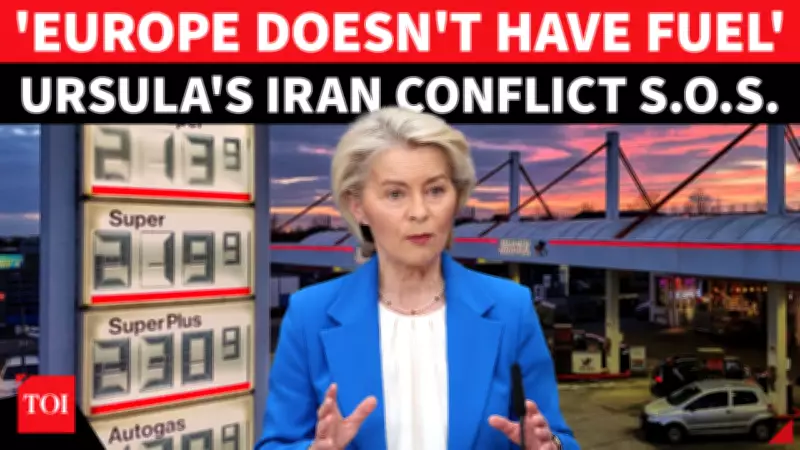
EU Confronts Escalating Energy Crisis as Iran-US Conflict Disrupts Global Supply
The European Union is grappling with a severe energy disruption, with officials revealing that the bloc's fossil fuel import bill has surged by more than €22 billion in just 44 days. This dramatic increase comes without any corresponding rise in actual energy supply, highlighting the profound economic impact of ongoing tensions between Iran and the United States.
Strait of Hormuz Instability Drives Cost Surge
According to European Commission President Ursula von der Leyen, the staggering cost spike reflects the scale of disruption caused by instability in the Gulf region, particularly around the critical Strait of Hormuz. This narrow waterway serves as a vital global energy chokepoint, through which approximately one-fifth of the world's oil supply passes daily.
The warning emerges as ceasefire negotiations between Washington and Tehran remain completely stalled following recent talks in Islamabad. While a temporary pause in hostilities had briefly appeared possible, the complete absence of any diplomatic breakthrough has kept international energy markets on edge and volatile.

Diplomatic Deadlock Compounds Economic Pressure
The European Union's energy predicament underscores how regional conflicts can rapidly translate into substantial economic consequences for distant economies. With the Strait of Hormuz representing such a crucial artery for global energy transportation, any disruption or threat to shipping through this passage immediately reverberates through international markets.
Market analysts note that the €22 billion increase represents a significant financial burden for European economies already navigating complex energy transition challenges. This development comes at a particularly sensitive time as many EU member states work to reduce dependence on Russian energy sources while simultaneously advancing climate goals.
Broader Implications for Global Energy Security
The situation highlights several critical concerns for global energy security:
- Vulnerability of key maritime chokepoints to geopolitical tensions
- Economic consequences of regional conflicts for distant economies
- Challenges in maintaining stable energy supplies during diplomatic crises
- Pressure on energy-importing regions to diversify supply sources
As the diplomatic impasse between Iran and the United States continues, European officials face mounting pressure to address both immediate energy security concerns and longer-term strategic vulnerabilities. The €22 billion cost increase serves as a stark reminder of how quickly geopolitical tensions can translate into tangible economic consequences for energy-importing regions.






