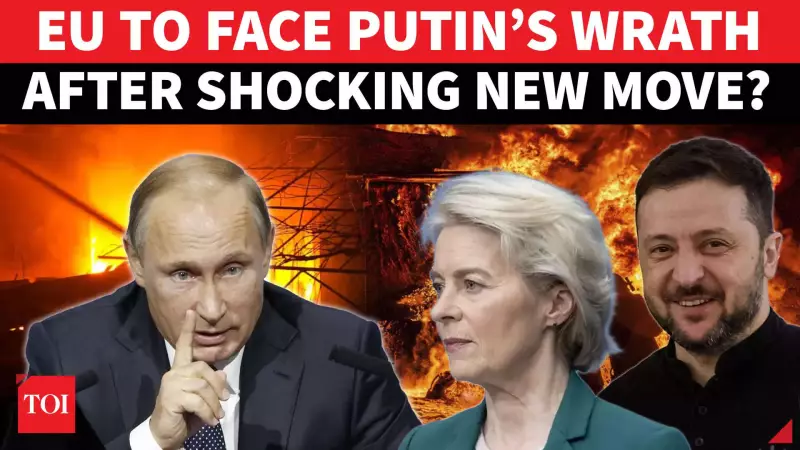
In a landmark decision fraught with internal debate, leaders of the European Union have given their final approval to a colossal financial support package for Ukraine, valued at a staggering €90 billion. The funds, earmarked for the period covering 2026 and 2027, are intended to sustain Ukraine's military resistance and economic stability amidst the ongoing war with Russia. The announcement, made on December 19, 2025, underscores Europe's long-term commitment to Kyiv, even as a clear path to ending the devastating conflict remains out of sight.
Inside the EU's Historic Decision
The approval of this massive war chest did not come easily. It followed intense negotiations and legal scrutiny within the 27-member bloc. Several member states raised concerns about the sheer scale of the commitment and its long-term implications for the EU's own budget and strategic autonomy. Despite these hurdles, the prevailing consensus was that allowing Ukraine to falter would pose a greater existential threat to European security. The package is designed as a structured, multi-year commitment, moving away from ad-hoc support to provide Kyiv with predictable funding for both its defence and civilian needs.
The primary aim is twofold: to ensure the Ukrainian military has the necessary resources to hold the line against Russian advances, and to prevent the collapse of the country's economy, which is vital for internal stability and the functioning of the state. This decision signals that European capitals are preparing for a conflict that may extend for years, not months.

Criticism and the Shadow of Prolonged Conflict
While hailed by Ukraine and its staunchest allies as a necessary act of solidarity, the decision has not been without its vocal critics. Several analysts and political figures within Europe warn that pumping such vast resources into the war effort, without a parallel and dominant diplomatic track, risks protracting the bloodshed rather than forcing a negotiation. They argue that the assurance of continuous Western funding could harden positions on both sides, making a compromise peace more difficult to achieve.
This criticism gains particular resonance as peace initiatives led by the United States are reported to be gaining traction outside Europe. The contrast highlights a potential strategic divergence: Europe doubling down on military and economic support, while other global players explore diplomatic off-ramps. The EU's move is seen by some as cementing a stance that prioritises a military solution, or at least a position of strength, before any talks can begin.
A War of Attrition with No End in Sight
The approval of the €90 billion package is a stark admission that European leaders see no imminent end to the war. It is a bet on Ukraine's endurance and a test of Europe's own resolve and economic capacity. The funds will flow into a conflict that has already reshaped global geopolitics, energy markets, and security doctrines.
The coming years will reveal whether this unprecedented support will enable Ukraine to reclaim its territory, or if it simply fuels a prolonged war of attrition. The deal also places immense pressure on the EU to deliver the promised aid efficiently and to maintain unity among its members as war fatigue potentially grows. As the bloc commits this historic sum, the world watches to see if this financial firepower can alter the war's trajectory or if the conflict, as feared, becomes a permanent fixture on Europe's eastern flank.