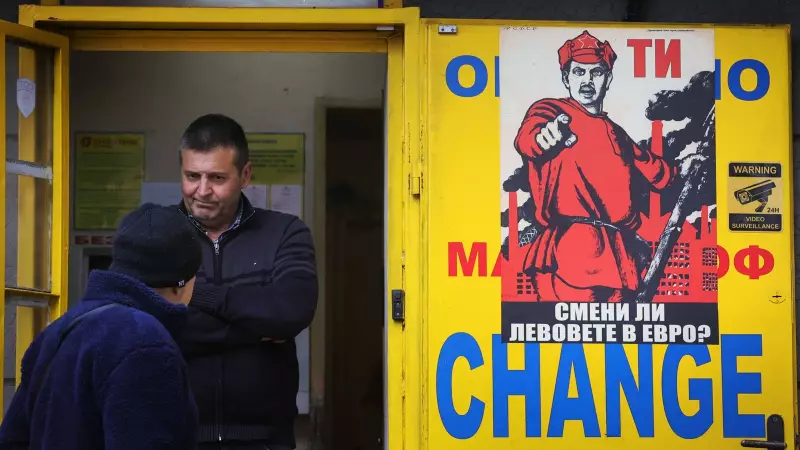
Bulgaria's long-awaited journey to join the Eurozone has hit a significant roadblock. Several member states of the European Union have expressed serious reservations, casting doubt on the country's planned entry date of January 1, 2025. This development introduces fresh uncertainty into the bloc's enlargement process and highlights the stringent economic checks that remain in place for aspiring euro members.
Mounting Concerns from EU Capitals
According to a report by the Financial Times, a number of EU countries are pushing for a delay in Bulgaria's accession to the euro. The primary point of contention revolves around the country's ability to meet the Maastricht criteria on inflation. While Bulgaria has formally fulfilled other key requirements, its inflation rate remains a sticking point for nations like France, Italy, and the Netherlands.
These countries argue that allowing Bulgaria to join while its inflation is not fully aligned could undermine the stability of the common currency. The debate is expected to come to a head during a critical meeting of EU finance ministers, known as the Ecofin council, scheduled for early July. A unanimous decision is required for Bulgaria to proceed, making every member state's stance crucial.
Bulgaria's Progress and the Remaining Hurdle
Officially, Bulgaria has been part of the EU's Exchange Rate Mechanism (ERM-2), often called the "euro waiting room," since July 2020. It has also been a member of the Banking Union concurrently. The country has made notable strides, particularly in bringing its budget deficit and public debt under control to meet the EU's fiscal rules.
However, the inflation criterion has proven to be a formidable challenge. The rule mandates that a country's average inflation rate must not exceed the average of the three best-performing EU member states by more than 1.5 percentage points over a 12-month period. Despite recent decreases, Bulgaria's inflation has struggled to stay within this narrow band, partly due to external economic pressures affecting the entire continent.
Bulgarian officials, including Finance Minister Assen Vassilev, have maintained an optimistic public stance. They assert that the country has satisfied all legal conditions and anticipate a positive outcome in July. The government in Sofia has passed all necessary legislation and insists its economic fundamentals are sound.
Broader Implications for EU Expansion
This situation transcends Bulgaria's national ambitions and touches on larger themes of EU integration and expansion. The reluctance of some member states signals a cautious, perhaps more rigid, approach towards further enlargement of the Eurozone, especially in a period of economic volatility.
A delay for Bulgaria could also have a knock-on effect on other candidate countries, notably Romania, which is further behind in the process. It underscores the message that political will alone is insufficient; strict economic convergence is non-negotiable. The outcome will set a precedent for how the EU manages the delicate balance between widening the euro's reach and preserving its internal stability.
Furthermore, the debate occurs against a backdrop of geopolitical shifts, where deeper integration of Eastern European members is often viewed as a strategic imperative. A postponement might be interpreted as a setback for the EU's cohesion and its influence in the region.
As the July Ecofin meeting approaches, all eyes will be on the delicate negotiations between Bulgaria's advocates and the cautious member states. The decision will not only determine Bulgaria's monetary future but also define the EU's appetite for and conditions regarding the next phase of Eurozone expansion.