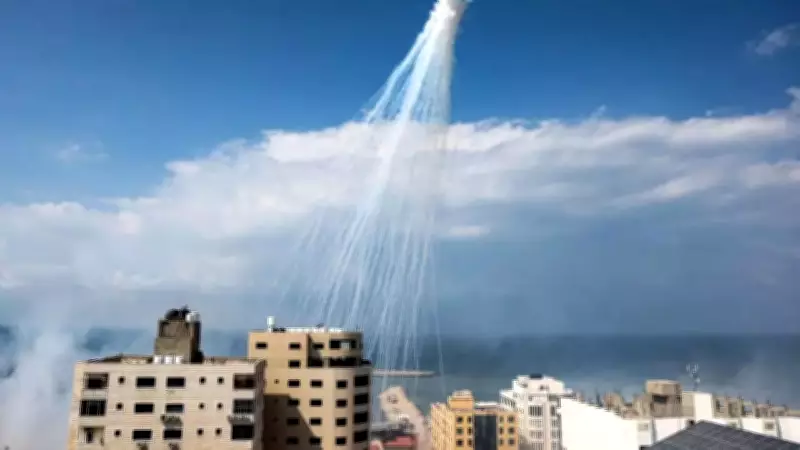
The Controversial Weapon: White Phosphorus in Modern Warfare
While headlines from conflict zones typically highlight missiles, drones, and airstrikes, certain weapons provoke a uniquely intense debate. White phosphorus stands out as one such substance. Employed by military forces for decades, its appearance in any conflict invariably sparks immediate controversy and legal scrutiny.
Recent Accusations Against Israel in Lebanon
This incendiary chemical has recently returned to global discourse following allegations by human rights organizations. Human Rights Watch has accused Israel of deploying white phosphorus munitions in southern Lebanon amid escalating regional tensions involving Iran-backed forces. The group claims to have verified photographic evidence showing airburst munitions detonating over residential areas.
Israeli authorities have not confirmed these allegations, stating they cannot comment on the specific visuals referenced in the report. This situation has revived a persistent and often confusing question: Is white phosphorus actually illegal under international law, or is it a legitimate military tool that becomes contentious only in specific applications?

Understanding White Phosphorus: Properties and Military Uses
White phosphorus is a chemical substance with a waxy, pale yellow or white appearance and a distinctive garlic-like odor. Its most remarkable property is its reaction with oxygen. When exposed to air, it can ignite spontaneously at temperatures above approximately 30°C, producing intense heat and thick white smoke clouds.
Militaries frequently utilize these characteristics for battlefield purposes. The dense smoke can obscure visibility, concealing troop movements, while the illumination aids nighttime operations. These applications—smoke generation, target marking, and area illumination—are generally permitted under international humanitarian law. Typically delivered via artillery shells that burst in the air, scattering burning fragments, it is these fragments that generate the weapon's notoriety.
The Severe Dangers of White Phosphorus to Human Health
White phosphorus poses extreme hazards to human beings. Contact with burning fragments causes deep, penetrating chemical burns that can consume tissue until the chemical exhausts itself or is deprived of oxygen. Reports indicate fragments may burn through muscle to the bone, creating injuries that are excruciatingly painful and challenging to treat.
Medical professionals must meticulously remove any remaining phosphorus particles during treatment, as they can reignite upon air exposure. The smoke itself is also harmful, irritating eyes, lungs, and skin. Inhalation or absorption through wounds can lead to chemical absorption into the body, with high exposure potentially damaging vital organs like the liver and heart. Severe poisoning may result in shock or death.
The Complex Legal Status Under International Law
The legality of white phosphorus is nuanced and frequently misunderstood. The chemical substance itself is not banned. Numerous nations possess and employ white phosphorus munitions for battlefield purposes, particularly smoke generation and signaling, as noted by the World Health Organization.
International humanitarian law focuses less on the chemical and more on its application. Weapons cannot be used in manners that indiscriminately harm civilian populations. When white phosphorus is deployed in densely populated areas—especially via airburst shells scattering burning particles widely—legal experts often contend it becomes unlawful. Human rights organizations argue such usage may violate the rules of war by creating uncontrollable fires and inflicting injuries on non-combatants.
Human Rights Watch Investigation in Lebanon
Human Rights Watch reports analyzing multiple images depicting what appears to be white phosphorus artillery bursts over the Lebanese town of Yohmor. The organization states the smoke clouds in the footage match the distinctive pattern characteristic of airburst phosphorus shells.

Civil defense teams were reportedly observed responding to fires in homes and vehicles in the area shortly after the incidents. The Israeli military has responded that it cannot confirm the claims at this stage, noting officials have not reviewed the specific evidence cited in the report. The military also clarified that its smoke shells may contain small quantities of white phosphorus intended for smoke screens rather than causing fires, adding these shells are not typically employed in densely populated civilian areas.
The ongoing allegations highlight the persistent tension between military utility and humanitarian protection, ensuring white phosphorus remains a focal point in debates over the ethics and legality of modern warfare.