

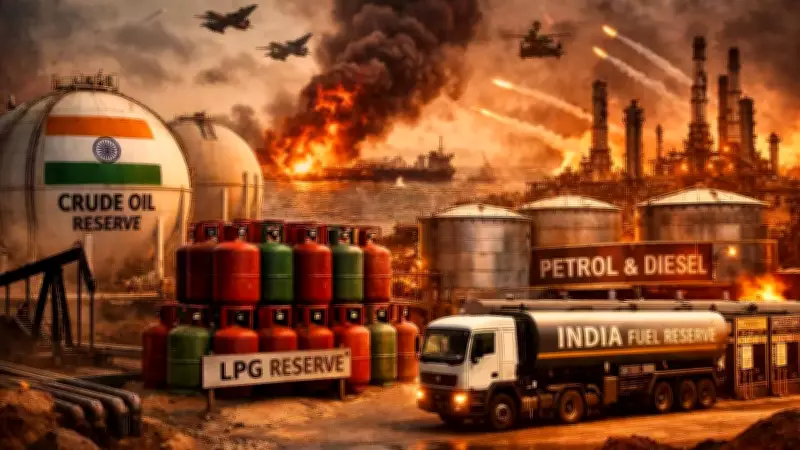
Middle East Tensions Disrupt India's Vital Energy Imports
Escalating conflicts in the Middle East, including the Israel-Iran war and attacks on UAE facilities, have severely impacted the supply of oil, LPG, and LNG to India. These resources are critical for the nation's growing economy, with disruptions stemming from the closure of the Strait of Hormuz, a key maritime route. Former US President Donald Trump has blamed Iran for recent violence, while the US Congress expresses concerns over rapid arms depletion amid increased military spending.
India's Energy Vulnerability and Strategic Reserves
As the world's third-largest oil importer and consumer, India relies heavily on imports: nearly 90% of crude oil, over 60% of LPG, and more than half of LNG come from abroad, primarily the Gulf region. The country maintains underground strategic petroleum reserves with a capacity of 5.33 million tonnes, currently filled to about 80%. However, these reserves are intended only for supply disruptions, not for price stabilization.
Brent crude prices surged to $120 before dropping below $90, reflecting market volatility. Despite this, Indian officials assure that petrol and diesel prices are unlikely to rise in the near future, even if crude remains at $110-120 per barrel.

Government's Emergency Measures and Policy Shifts
In response to the crisis, India has activated several emergency steps:
- Increased Russian Crude Purchases: India has ramped up procurement of Russian crude to offset Middle East delays, asserting independence from US approvals. Russia was the largest supplier in February, as India expanded its supplier base from 27 to 40 countries globally.
- Refusal to Release Strategic Reserves: India will not participate in the International Energy Agency's initiative to ease global prices, citing an "India first" policy. Officials state the crisis is not of India's making and reserves are for supply emergencies only.
- Natural Gas Prioritization: The government has revised gas allocation priorities, placing LPG production, CNG, and piped cooking gas at the top. Fertilizer sectors receive secondary priority, while industrial users face reduced supplies.
- Boost in LPG Production: Oil refiners are directed to maximize output of propane, butane, and related streams for domestic LPG, ensuring supply to state-run companies like Indian Oil, HPCL, and BPCL.
- Extended LPG Refill Waiting Period: The minimum booking interval for domestic LPG refills has been increased from 21 to 25 days to prevent hoarding and manage shortages.
Impact on Commercial and Domestic Sectors
While domestic LPG supplies remain adequate, commercial cylinders face restrictions, affecting restaurants, hotels, and industries. In cities like Bengaluru and Mumbai, eateries report severe shortages, with some risking closure. The government prioritizes imported LPG for hospitals and educational institutions, while a committee reviews allocations for other non-domestic users.
Seeking Alternative Sources and Inflation Outlook
India is exploring LPG imports from the US, Algeria, Norway, and Canada, though longer transit times delay deliveries. Finance Minister Nirmala Sitharaman notes that crude price hikes may not cause sharp inflation spikes, with a 10% increase typically raising inflation by about 30 basis points.
Overall, India's energy security strategy emphasizes diversification and emergency preparedness, aiming to buffer against global disruptions while safeguarding domestic needs.






