In a forceful response to a deadly attack on American personnel, the United States has unleashed a major military operation against ISIS targets in Syria. The action, dubbed Operation Hawkeye Strike, was authorised by US President Donald Trump following the killing of two US soldiers and a civilian interpreter in the Syrian desert.
Trump's Stern Warning and Justification for the Strike
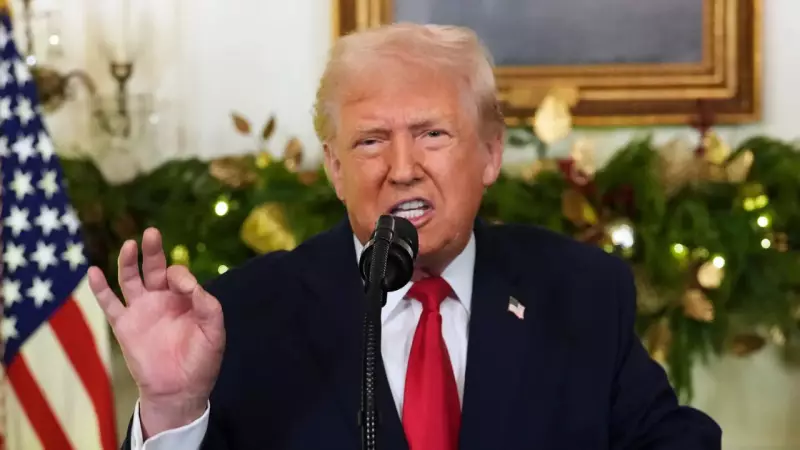
President Trump issued a stark warning to terrorist groups, stating that any entity threatening the United States would face unprecedented consequences. He directly linked the military operation to the deaths of the American personnel, whose remains were repatriated earlier in the week. "Because of ISIS’s vicious killing of brave American Patriots in Syria... I am hereby announcing that the United States is inflicting very serious retaliation," the President declared. He emphasised that the strikes targeted ISIS strongholds in regions of Syria that have been central to the group's operations.
In his statement, Trump also mentioned the Syrian government, noting its leader was "working very hard to bring Greatness back to Syria" and was in full support of the action. His message to terrorists was unequivocal: "YOU WILL BE HIT HARDER THAN YOU HAVE EVER BEEN HIT BEFORE IF YOU, IN ANY WAY, ATTACK OR THREATEN THE USA."

Details of the Operation and the Attack That Prompted It
According to reports from Syrian state television and the Associated Press, the US strikes hit multiple locations. The bombardment focused on areas in the countryside of Deir ez-Zor and Raqqa provinces, as well as the Jabal al-Amour area near the historic city of Palmyra. The targets were described as weapons storage facilities and command centres used by the Islamic State group to plan and execute operations in the region.
The operation was a direct retaliation for an attack that occurred nearly a week prior near Palmyra. The US Army identified the fallen soldiers as Sgt Edgar Brian Torres-Tovar, 25, of Des Moines, and Sgt William Nathaniel Howard, 29, of Marshalltown. Also killed was Ayad Mansoor Sakat of Macomb, Michigan, a US civilian serving as an interpreter. The assault injured three more US service members and several Syrian security personnel. The attacker was reportedly shot and killed at the scene.
Regional Implications and the Ongoing Fight Against ISIS
This significant escalation underscores the continued, volatile presence of ISIS remnants in Syria, despite the group's territorial defeat. Operation Hawkeye Strike signals a clear intent by the US to respond aggressively to threats against its forces stationed in the region. The involvement of National Guard members highlights the broad scope of US military deployment in Syria. The aftermath of these strikes and the President's forceful rhetoric are likely to shape the security dynamics in eastern Syria, affecting not only ISIS remnants but also the complex web of local and international actors in the area. The US maintains that its goal is the eradication of ISIS to ensure a more stable future for the conflict-ridden nation.