

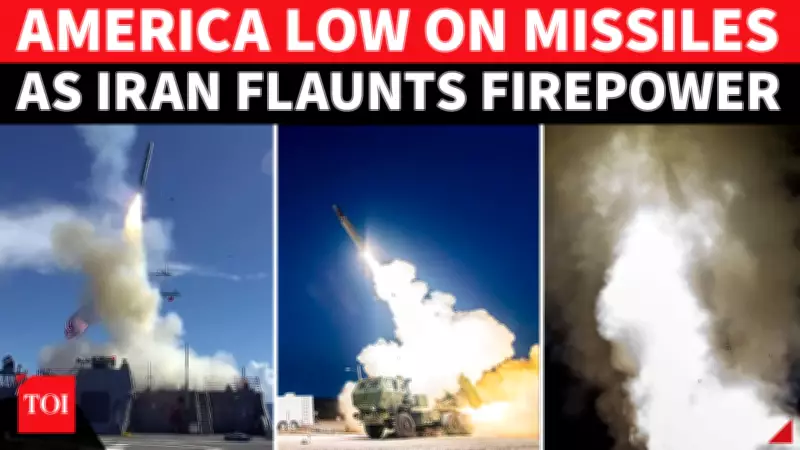
U.S. Faces Critical Missile Shortage as Iran Conflict Drains Arsenal
In a startling development that underscores the escalating military pressures in the Middle East, the United States is grappling with a severe depletion of its missile defense systems following intense engagements with Iran. According to a recent report from the Center for Strategic and International Studies (CSIS), the U.S. military has expended close to 50% of its Patriot and Terminal High Altitude Area Defense (THAAD) interceptor stockpiles over a span of just 50 days of active conflict. This rapid consumption has pushed inventory levels to what officials describe as "concerning lows," raising alarms within the Trump administration about national security readiness.
Budgetary and Industrial Responses to the Crisis
In response to this critical shortage, the Trump administration is reportedly considering a monumental $1.5 trillion defense budget allocation aimed at revitalizing the nation's military-industrial capabilities. This proposed funding is intended not only to replenish depleted missile stocks but also to modernize and expand production lines. Notably, the administration has initiated discussions with major American automotive manufacturers, including Ford and General Motors, to leverage their mass-production expertise for accelerating missile manufacturing. This move signals a potential shift towards a more integrated defense-industrial strategy, blending civilian and military sectors to meet urgent wartime demands.
Iran's Military Display and Regional Implications
Amidst these developments, Iran's Islamic Revolutionary Guard Corps (IRGC) has been actively showcasing its advanced ballistic missile capabilities in Tehran, including the Ghadr and Kheibar long-range systems. This public display of military prowess serves as a stark reminder of Iran's growing assertiveness in the region, potentially complicating U.S. strategic calculations. The situation is further exacerbated by ongoing incidents such as the capture of vessels in the Strait of Hormuz and heightened tensions with neighboring countries, which collectively contribute to an unpredictable security environment.

Analysts are divided on the implications: some view the U.S. missile shortage as a temporary setback that could spur a comprehensive overhaul of defense production, while others warn it may expose vulnerabilities in America's global military dominance. The involvement of automakers suggests an innovative approach to crisis management, but questions remain about the feasibility and timeline of such a large-scale industrial reboot. As diplomatic efforts continue, with calls from Russia and other nations for peaceful resolution, the world watches closely to see if this marks a pivotal moment in U.S. defense policy or merely the prelude to a prolonged and costly confrontation.






