

Ukraine has firmly rejected Russian allegations that it launched a drone attack targeting one of President Vladimir Putin's secluded residences, labelling the claim a deliberate falsehood aimed at derailing diplomatic efforts to end the war. The accusation and subsequent denial mark a critical juncture in the ongoing conflict, with Western leaders rallying behind Kyiv and expressing deep scepticism towards Moscow's narrative.
Kyiv and Allies Dismiss Kremlin's 'Terrorist Act' Claim
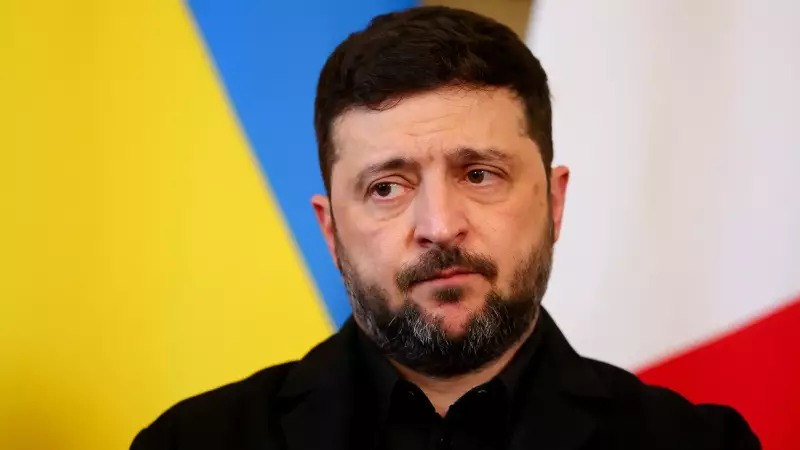
On Tuesday, Ukrainian officials stated there was no plausible evidence to support Russia's assertion of a drone strike on Putin's residence in the Novgorod region. President Volodymyr Zelensky called the incident a "complete fabrication" designed to manipulate the backdrop of peace negotiations. He revealed that Ukraine's negotiating team had coordinated with American counterparts, and after analysing the details, they concluded the attack was staged.
The Kremlin, however, described the alleged incident as a "terrorist act" and a personal attack against Putin. In a statement, it claimed the Russian army had decided "how, when and where" to retaliate against Ukraine and would now toughen its stance in talks. Notably, Moscow admitted it could not provide physical evidence, stating the drones were "all shot down."

This claim has found little traction among Ukraine's key allies. A French presidential source indicated that the Kremlin's statements lacked "any solid proof, including after cross-checking information with our partners." German opposition leader Friedrich Merz emphasised the need for transparency and honesty from all sides, including Russia.
Diplomatic Moves Amid Escalating Violence
The controversy unfolds at a sensitive diplomatic moment. President Zelensky announced a summit of the "coalition of the willing" – Western nations pledging support for Ukraine – scheduled for January 6 in France. This will be preceded by a meeting of security advisors from allied countries in Ukraine on January 3.
Meanwhile, the brutal conflict on the ground shows no signs of abating. Russia has maintained an almost daily barrage of drones and missiles against Ukraine for nearly four years, resulting in thousands of deaths. Recent weeks have seen intensified strikes in the Odesa region, where Ukraine on Tuesday blamed Russia for drone attacks on two civilian vessels.
Furthermore, Ukraine's military reported that Russia's advance in the east has picked up pace since autumn, with more villages falling each week. In response to intense shelling, Ukrainian authorities ordered the mandatory evacuation of several villages in the northern Chernigiv region, which borders Moscow-allied Belarus.
Secrecy, Residences, and Stalled Peace Plans
The Novgorod residence at the centre of the alleged attack is known for its secrecy, much like Putin's private life. The late Russian opposition leader Alexei Navalny had previously published investigations into this luxury lakeside property. Reports suggest Putin has used it more frequently since the war began due to its secluded location and enhanced air defence systems.
On the diplomatic front, Ukraine has stated it agrees with 90 percent of a US-drafted peace plan, but Russia remains hesitant, insisting on its maximalist demands. Putin has repeatedly threatened to seize more Ukrainian land if diplomacy fails. The latest allegations, viewed by Kyiv as a provocation, threaten to further complicate the already fragile peace process.
In a contrasting reaction, former US President Donald Trump, who spoke to Putin on Monday, directed criticism at Kyiv. "It's one thing to be offensive because they're offensive. It's another thing to attack his house," Trump said, despite Ukraine's firm denial of any involvement.






