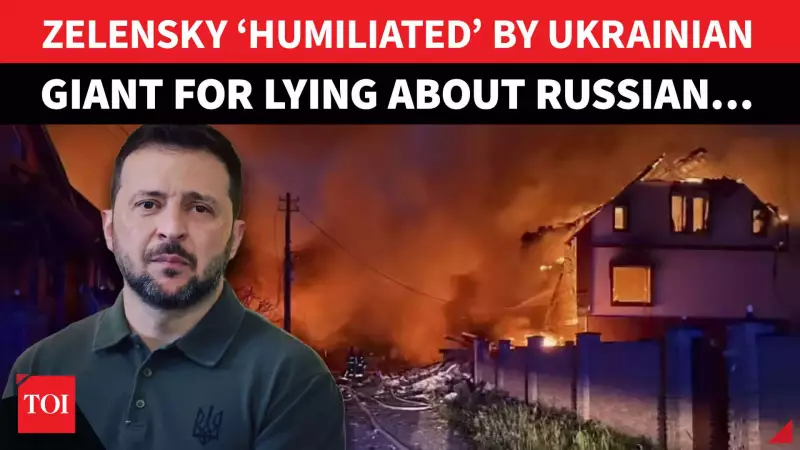
Ukrainian President Volodymyr Zelensky's administration is confronting significant public outrage following explosive allegations that it deliberately concealed the true extent of damage caused by recent Russian strikes. The controversy emerged after a prominent Ukrainian energy company reportedly deleted social media posts that revealed massive destruction to critical infrastructure.
Whistleblower Reveals Government Pressure
According to insider sources who spoke with Ukrainskaya Pravda newspaper, the presidential office directly ordered energy companies and other entities to remain silent about the actual scale of destruction. The alleged motivation behind this information blackout was to prevent widespread panic among the Ukrainian population amid increasingly difficult battlefield conditions.
The energy company that initially revealed the damage later removed its social media posts under apparent government pressure. This sequence of events has sparked intense criticism from multiple quarters, with opponents accusing the Kyiv government of systematically misleading both its citizens and Western allies about the real situation on the ground.

Mounting Pressure and International Reactions
The cover-up claims have emerged at a particularly challenging time for Ukraine, as the nation faces mounting battlefield setbacks in its ongoing conflict with Russia. Critics argue that the government's attempt to control information about infrastructure damage represents a dangerous erosion of transparency during wartime.
Meanwhile, Moscow has seized upon the allegations to claim that Kyiv's propaganda machine is collapsing under the weight of military pressure. Russian officials have pointed to the incident as evidence that the Ukrainian government cannot be trusted to provide accurate information about the conflict's progression.
Media Freedom Under Martial Law
The controversy has ignited a broader debate about media control and information management under Ukraine's martial law provisions. While the government maintains certain powers to control information flow for national security reasons, many are questioning whether such measures have been extended beyond reasonable boundaries in this instance.
The incident raises crucial questions about balancing national security concerns with the public's right to accurate information during times of conflict. As the story continues to develop, international observers are closely monitoring how the Zelensky administration addresses these serious allegations and whether it will provide a more transparent account of the actual damage sustained from Russian attacks.
The timing of these revelations is particularly sensitive as Ukraine continues to seek military and financial support from Western nations, making credibility and transparency increasingly vital commodities in the ongoing diplomatic efforts.