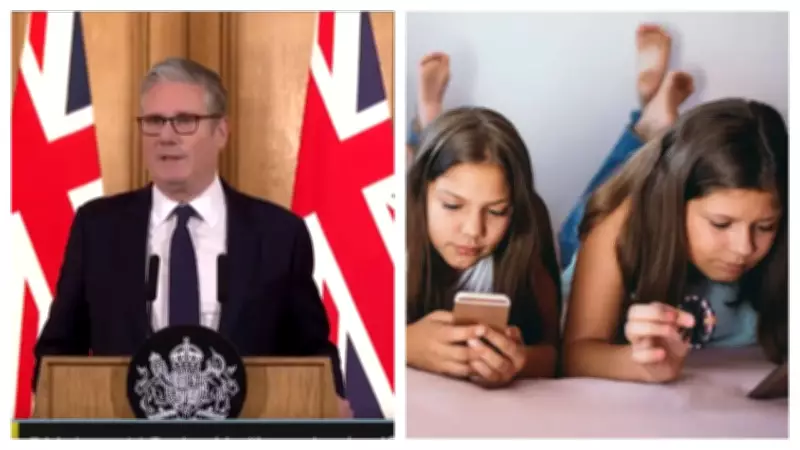
The UK government has taken a major step to transform young minds towards a better life and focused education by announcing a ban on social media for teens under 16. Prime Minister Sir Keir Starmer declared a landmark decision to prohibit social media access for under-16s. Here is everything you need to know about this historic move.
The Landmark Decision
The UK government has drawn a definitive line in the sand, announcing a historic plan to ban children under 16 from using social media platforms. This move, aimed at “giving kids their childhood back,” will block major platforms from offering services to young teens and establish tough new restrictions on harmful online features. Backed by an overwhelming majority of parents, the decisive action is expected to be brought to Parliament before Christmas, with the first wave of protections legally coming into force by Spring 2027.
Parents and Their Concern Over Giants
The announcement follows one of the largest national conversations in recent government history, drawing more than 116,000 responses from parents, experts, and children. The public feedback revealed a massive mandate for change: 9 in 10 parents stated they would support a social media ban for children under 16, and two-thirds of young people agreed that under-16s should be restricted from using at least some platforms. Prime Minister Keir Starmer emphasized that the digital landscape has left families feeling powerless against big tech algorithms. “Parents want to keep their kids safe and happy, but the online world has made that harder than ever,” Starmer said. “I’ve heard firsthand from families crying out for change and we will do right by them.” He added that the move sends a clear message to the industry. “This is a line in the sand. Tech giants had their chance and failed, but we’re stepping in to protect children, back parents and set a new normal for future generations.”

Which Platforms Are Banned?
The UK plans to replicate the regulatory model used by Australia. The ban will specifically target “user-to-user” platforms—services designed primarily to enable social interaction, allow public posting, and utilize algorithmic feeds to boost engagement. Under these criteria, mainstream services like Snapchat, TikTok, YouTube, Instagram, Facebook, and X will be entirely blocked for under-16s. Crucially, the government does not intend to disrupt essential daily communication between families. Pure messaging services like WhatsApp and Signal are explicitly excluded from the social media ban.
Going Beyond a Blanket Ban
Ministers are looking past simple age restrictions to tackle how children experience harm online, rather than just where it happens. The new measures will introduce world-leading blocks on specific high-risk features, including live streaming and communication with strangers. Crucially, these specific functional restrictions will extend past social media to impact online gaming sites and other digital platforms. To prevent a sudden safety “cliff-edge” when a teenager turns 16, protections against live streaming and stranger communication will remain turned on by default for 16- and 17-year-olds. Furthermore, the government is drawing up plans for overnight curfews and mandatory breaks in infinite scrolling for all users under 18, with more details scheduled for release in July. Technology Secretary Liz Kendall emphasized that the regulations are designed to shift the balance of power. “Today we take a bold and significant step towards creating a safer, healthier life online for our children and future generations,” Kendall said. “Tech companies have had countless opportunities to keep children safe, yet they have failed to act. That is why we are taking power away from the tech giants and putting it back in parents’ hands.”
Strict Age Limits for AI Chatbots
The policy also clamps down on emerging artificial intelligence software. So-called AI “romantic companion” chatbots—which are designed to simulate sexual relationships or engage in romantic roleplay—will be forced to enforce a strict minimum age of 18. Similar intimate functionalities on broader, mainstream AI chatbots will also be heavily restricted for any user under the age of 18.

Tougher Age Checks
To ensure tech companies comply and children cannot easily bypass the new safeguards, the UK is introducing Highly Effective Age Assurance (HEAA) measures. The media regulator, Ofcom, has been directed to launch an immediate study into the most effective technology for verifying whether a user is over 16. The Secretary of State has also written to the new chair of Ofcom, ordering an urgent review of enforcement capabilities and demanding a clear compliance strategy. The government has confirmed it will provide Ofcom with the necessary funding to handle these new duties alongside its existing work under the Online Safety Act—which includes tackling child sexual abuse material, online fraud, and protecting women and girls online.
Reclaiming a Healthy Childhood
The government is using secondary legislation through the ‘Children’s Wellbeing and Schools Act’ to bypass the lengthy process of creating an entirely new Act of Parliament. This fast-track method allows the targeted regulations to take effect as early as Spring 2027. The initiative arrives alongside a broader push to improve children’s offline lives. The government recently issued a three-month deadline for tech companies to make it impossible for children to take, share, or view nude images online. Simultaneously, new educational and community reforms aim to bridge the “participation gap” by giving young people vastly greater access to sports, arts, nature, and creative activities outside of the digital world.
Inputs from UK.Gov official website.