

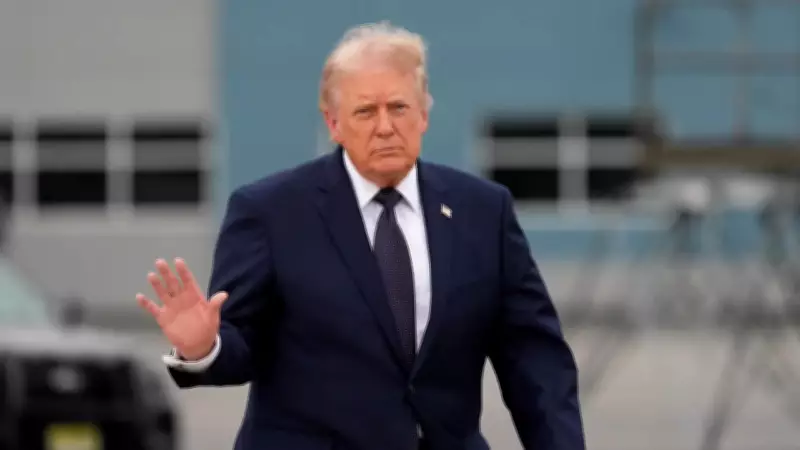
President Donald Trump, who built his political movement on the pledge to end America's costly foreign wars, is now openly threatening one of the most audacious military actions contemplated by any modern U.S. administration: the seizure of Iran's Kharg Island. This tiny but strategically vital Persian Gulf outpost handles roughly 90 percent of Iran's crude oil exports. Trump's frustration with Tehran's refusal to negotiate on his terms has led him to escalate rhetoric dramatically.
Trump's Evolving Stance
In a social media post, Trump declared, "The United States will be hitting Iran... VERY HARD TONIGHT." He added, "At some point in the not too distant future, we will be taking Kharg Island, and other oil infrastructure points, and assume total control of their Oil and Gas Markets, much like we have with Venezuela." This language marks a stunning evolution from his earlier calls for ceasefire and restraint. Speaking on Fox News, Trump revealed that Kharg Island has long fascinated him as both a strategic and commercial prize. "My preference has always been to take Kharg Island," he said, though he acknowledged, "I don't know that America has the stomach for it, to be honest with it." True to his business instincts, he added, "You'd make a fortune."
Strategic Importance of Kharg Island
Kharg Island, roughly one-third the size of Manhattan, is located about 20 miles off Iran's coast. It serves as the beating heart of Iran's energy sector, with analysts estimating that nine out of every ten barrels of Iranian crude exported to world markets pass through its terminals. Controlling this island would give the U.S. immense leverage over global oil markets.

Support from Hawks
Trump's proposal has found enthusiastic support among hawkish Republicans. Senator Lindsey Graham argued that controlling Kharg could fundamentally alter the balance of power. "If there is no deal soon, Mr. President, you are right to put on the table the taking of Kharg Island," Graham wrote, calling it "the ultimate game changer." He suggested that combining control of Kharg with freedom of navigation through the Strait of Hormuz would restore American leverage. Retired General Keith Kellogg was even blunter, recommending that the U.S. tell the world: "You won't get any oil. We control the oil. We're the oil barons."
Alarms from Critics
However, even some figures aligned with Trump's foreign policy instincts are sounding alarms. Former Trump administration official Joe Kent warned that any occupation could rapidly become a military nightmare, making U.S. troops essentially hostages, as Iran retains some capabilities despite repeated U.S. strikes. Democrats were appalled. Representative Ted Lieu stated, "Only Congress can declare war. Invading Iran's Kharg Island would be brazenly unconstitutional. American troops would die during the invasion. And then every day Iran would try to kill more American troops on Kharg Island."
Military and Logistical Challenges
Military analysts note that taking the island may be easier than holding it. Kharg lies within easy striking distance of the Iranian mainland. Even if Tehran's conventional military capabilities have been degraded, Iran is believed to retain drone and missile arsenals capable of targeting a fixed American position. Occupying forces could face constant harassment from Shahed drones, missile attacks, and sabotage operations. Experts warn that a successful amphibious assault could quickly evolve into an open-ended and costly deployment. Logistical challenges are daunting: reinforcements would need to traverse hundreds of miles of contested waters or depend on regional partners whose enthusiasm for hosting a wider war remains uncertain.

Broader Implications
Trump's threats raise fundamental questions about his broader strategy. One possibility is that the rhetoric represents coercive diplomacy—an attempt to frighten Iranian leaders into making concessions. Yet such brinkmanship carries risks. Analysts warn that threats of territorial seizure can harden positions in Tehran, empower hardliners, and narrow the already limited space for negotiations. Iranian leaders, having framed the conflict as resistance against foreign domination, may find it politically impossible to compromise under explicit threats of occupation. Alternatively, Trump may genuinely be considering escalation. If so, it would represent the most dramatic departure yet from the anti-interventionist impulses that helped propel him to power. The president who once mocked America's "endless wars" would be contemplating precisely the kind of boots-on-the-ground operation he long condemned. The consequences would extend well beyond Washington and Tehran, affecting capitals from New Delhi to Tokyo, Beijing to Seoul.





