Syrian Government Announces Ceasefire and Takes Control After SDF Retreat
The Syrian government declared a ceasefire with the Syrian Democratic Forces on Sunday. This move gives Damascus almost complete control over the country. It also dismantles the Kurdish-led forces that controlled northeastern Syria for more than ten years.
Tensions Boil Over and Government Forces Push East
Tensions between government troops and the SDF escalated earlier this month. This eventually led to a major push by government forces toward the east. The SDF largely retreated after initial clashes in a tense front line area in eastern Aleppo province.
Syria's Defense Ministry stated it ordered the fighting to stop on the front lines after announcing the agreement. The SDF did not confirm the deal. It also did not immediately respond to a request for comment from The Associated Press.

Struggle for Authority and Previous Failed Agreement
Syria's new leaders have struggled to assert full authority over the war-torn country since toppling Bashar Assad in December 2024. An agreement was reached in March to merge the SDF with Damascus. However, it did not gain traction as both sides accused each other of violating the deal.
Since the recent push, the government has largely asserted control of Deir el-Zour and Raqqa provinces. These are critical areas under the SDF that include oil and gas fields, river dams along the Euphrates, and border crossings.
Signing the Agreement and Presidential Statements
Syria's state-run news agency SANA showed President Ahmad al-Sharaa signing and holding the agreement. SDF leader Mazloum Abdi was scheduled to meet the president in Damascus but was not seen. His signature did appear on the document.
Al-Sharaa told journalists that Abdi could not travel due to bad weather. He said Abdi will visit Damascus on Monday after reaching the agreement over the phone.
"It's a victory for all Syrians of all backgrounds," al-Sharaa told journalists in Damascus after signing the agreement. "Hopefully Syria will end its state of division and moves to a state of unity and progress."
U.S. Involvement and Praise for the Deal
The two warring sides are key allies of Washington. U.S. Envoy Tom Barrack met with al-Sharaa earlier Sunday as government forces swept into Raqqa city and across Deir el-Zour province. Abdi reportedly joined the meeting over the phone.
Barrack praised the agreement. He said it will lead to "renewed dialogue and cooperation toward a unified Syria," ahead of working on implementation details.
"This agreement and ceasefire represent a pivotal inflection point, where former adversaries embrace partnership over division," said Barrack in a post on X.
Key Terms of the Agreement
The agreement includes several major provisions:
- Dismantling the SDF and having its forces join Syria's military and security forces.
- Giving senior military and civilian officials high-ranking positions in state institutions.
- The SDF giving up Raqqa and Deir el-Zour provinces to the Syrian military and government.
- Surrendering border crossings and oil and gas fields.
- Hassakah Province returning its civilian administration to Damascus.
- Handing over Kurdish-led agencies that handled prisons and sprawling camps with thousands of detained Islamic State group fighters and families to Damascus.
There is no clear timeline on when and how the different elements will go into effect. Al-Sharaa told journalists it will be gradually implemented, beginning with the cessation of hostilities.
Recent Military Advances and Territorial Losses
Tensions following clashes in Aleppo earlier this month appeared to calm after Abdi announced his troops would withdraw east of the Euphrates River. Al-Sharaa also issued a presidential decree to strengthen Kurdish rights in the country.
However, overnight the Syrian military seized Tabqa and continued into Raqqa province. Syrian troops reached much of Raqqa city by the time of the announcement. Armed Arab clans in Raqqa and Deir el-Zour that largely do not support the SDF backed Damascus.
By evening, the SDF lost control of large swaths of its territory and infrastructure. This included dams and oil and gas fields.

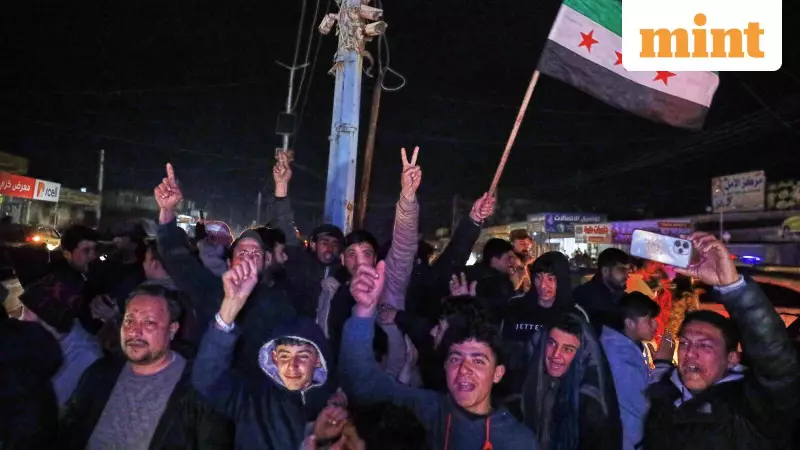
An Associated Press reporter in the area said large military convoys swept into Raqqa city and were greeted by residents. It appeared the SDF had withdrawn.
Historical Context of SDF Control
The SDF took Tabqa from IS in 2017 as part of its military campaign to take down the Islamic State group's so-called caliphate. At its peak, this caliphate stretched across large parts of Syria and Iraq. IS declared Raqqa its capital at the height of its control.