Deadly Suicide Attack Targets Shia Mosque in Islamabad
A devastating suicide bombing at a Shia mosque in Islamabad on Friday resulted in the deaths of at least 31 people, with more than 170 others wounded, marking the deadliest attack in Pakistan's capital since the 2008 Marriott bombing that killed 60 individuals. The explosion occurred at the Imam Bargah Qasr-e-Khadijatul Kubra mosque on the city's outskirts immediately following Friday prayers, according to police officials who warned that the casualty toll was "expected to rise".
Attack Details and Immediate Aftermath
A security source revealed that the attacker was stopped at the gate of the mosque before detonating himself. No terrorist group has claimed responsibility for the assault at this time. Eyewitness Muhammad Kazim, a 52-year-old worshipper, described hearing gunfire during the first bow of namaz, followed by an "extremely powerful" explosion that ripped through the building while congregants were still in the bowing position.
AFP journalists at the Pakistan Institute of Medical Sciences hospital witnessed chaotic scenes as victims, including children, were carried in on stretchers or by their arms and legs. Medics and bystanders assisted in unloading individuals with blood-soaked clothing from ambulances and vehicles, with at least one casualty arriving in the boot of a car. Friends and relatives of the wounded wept and screamed as victims—both dead and alive—were brought to the heavily guarded emergency ward.

Political Reactions and Accusations
Pakistan's Defense Minister Khawaja Asif took to social media platform X to assert that the bomber had a history of travel to Afghanistan and accused India of sponsoring the attack, though he provided no evidence to support this claim. In response, India's Ministry of External Affairs condemned the bombing and offered condolences for the deaths, but stated it was unfortunate that "instead of seriously addressing problems plaguing its social fabric, Pakistan should choose to delude itself by blaming others." The MEA firmly rejected what it termed as 'baseless' charges from Pakistan.
Security and Regional Implications
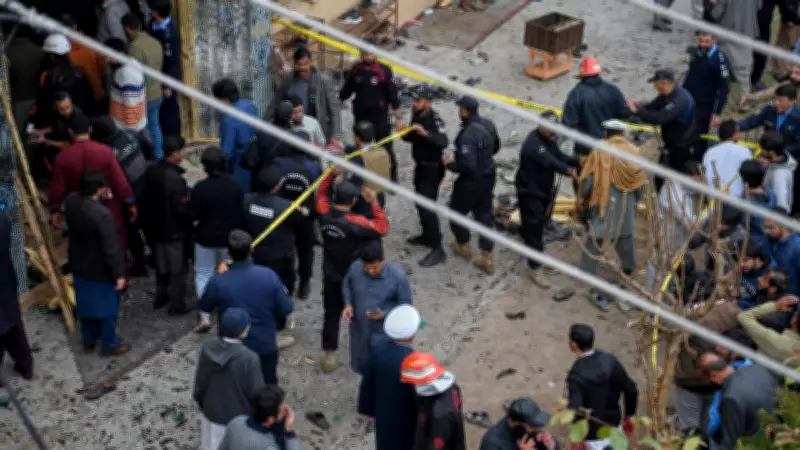
Another team of AFP journalists observed armed security forces deployed outside the mosque, where pools of blood were visible on the ground. Yellow crime scene tape cordoned off an investigation area, with shoes, clothing, and broken glass scattered around the site. Unverified videos shared on social media showed several bodies lying near the mosque's front gate.
South Asia analyst Michael Kugelman suggested on X that the target indicated the attack was likely carried out by either the local affiliate of the Islamic State or anti-Shia militants. This assault occurs amid Pakistan's security forces battling intensifying insurgencies in southern and northern provinces bordering Afghanistan. Pakistan is a Sunni-majority nation, but Shias constitute between 10 and 15% of the population and have historically been targeted in attacks across the region.
Islamabad has repeatedly alleged that separatist armed groups in Balochistan, along with the Pakistani Taliban and other Islamist militants in Khyber Pakhtunkhwa province near the capital, have used Afghan territory as a safe haven to launch attacks. Afghanistan's Taliban government has consistently denied these accusations, leading to plummeting bilateral ties and recent clashes between forces from both sides along the shared border.