

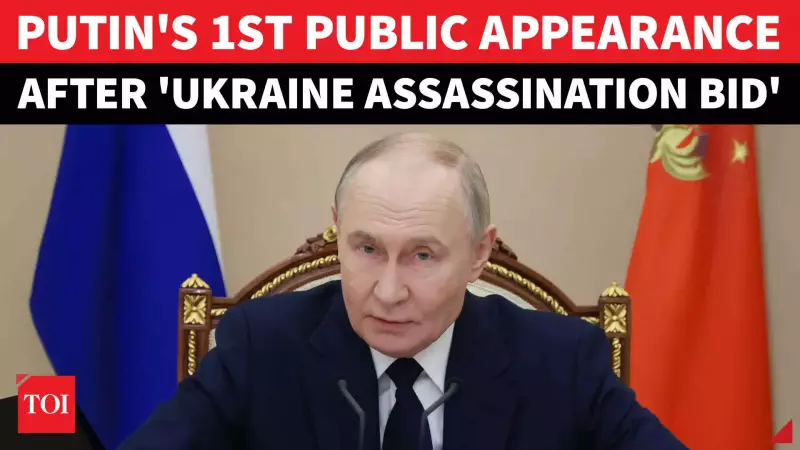
In a significant address following a reported attack on his residence, Russian President Vladimir Putin has issued a sweeping directive aimed at the long-term welfare of soldiers injured in the ongoing conflict in Ukraine. The order, delivered during a high-level meeting with defence officials, underscores the mounting human cost of the war and places a renewed onus on the state to care for its returning veterans.
Putin's Directive: A Lifelong Commitment
Speaking at the meeting on December 31, 2025, President Putin explicitly urged authorities to provide everything necessary for troops wounded in Ukraine to adapt to civilian life. He moved beyond immediate medical care, outlining a vision for sustained, long-term support that extends well beyond the purview of the defence ministry.
Putin stressed the state's fundamental obligation to ensure that injured servicemen feel fully valued and integrated into society. His remarks signal a formal recognition of the prolonged challenges faced by veterans, including the need for psychological rehabilitation, social reintegration, and continuous physical care.

Key Components of the Support Order
The Russian leader specified several critical areas where support must be guaranteed. Firstly, he emphasised the provision of adapted housing suitable for the disabilities of wounded soldiers. Secondly, he highlighted the importance of access to sports and physical rehabilitation programs. Most notably, Putin called for a support system that offers help for the long haul, ensuring veterans are not abandoned after their initial treatment concludes.
This public mandate to senior officials is seen as an attempt to formalise and systematise care for the thousands of troops who have sustained serious injuries since the invasion began. It addresses growing concerns, both domestically and internationally, about how Russia manages the aftermath of war for its citizens.
Context and Implications of the Announcement
The speech gains added significance as it is Putin's first public address after an alleged Ukrainian attack on his official residence. By immediately pivoting to the issue of soldier welfare, the Kremlin appears to be reinforcing a narrative of national resilience and state responsibility.
Analysts view this move as having dual purposes. Internally, it aims to bolster morale among troops and their families, assuring them of state backing. Externally, it seeks to project an image of a government that cares for its combatants, even as the war continues. However, the order also unavoidably spotlights the severe and ongoing casualties Russia is sustaining, bringing the war's human toll back into sharp focus.
The directive places renewed scrutiny on Moscow's treatment of veterans, a historically challenging issue. The success of this order will depend on the allocation of substantial resources and the creation of effective implementation mechanisms across various Russian government departments.
As the conflict persists, this development marks a crucial shift towards acknowledging and planning for its enduring societal impact within Russia, setting the stage for a long-term national commitment to a generation affected by the war in Ukraine.






