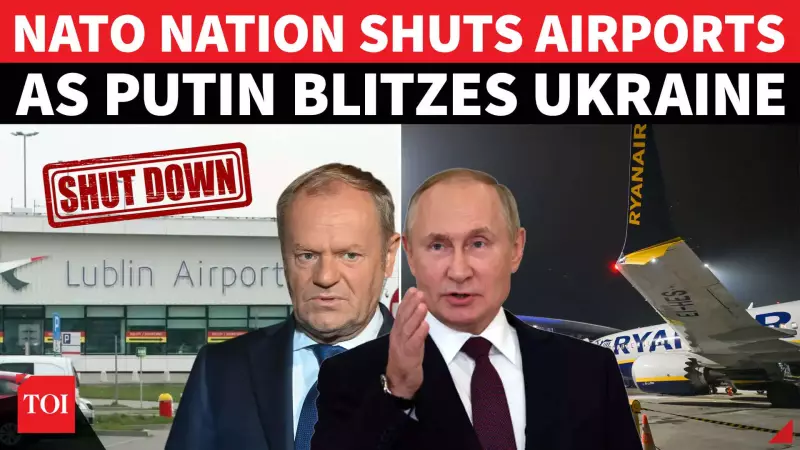
Poland was forced to activate emergency security measures, including the temporary shutdown of key airports and the scrambling of fighter jets, following a massive overnight Russian bombardment of neighbouring Ukraine. The dramatic response on December 27, 2025, underscored the escalating spillover risks for NATO's frontline states as the conflict intensifies.
NATO Border on High Alert
The Polish authorities made the decisive move to close the airports in Rzeszow and Lublin, both located near the country's eastern border with Ukraine. This action was a direct precautionary measure triggered by a severe wave of Russian missile and drone strikes that hit targets across Ukraine, including the capital Kyiv. Simultaneously, Polish air defence and radar units were placed on the highest state of alert to monitor and safeguard national airspace from any potential stray projectiles or intentional incursions.
Immediate Response to Regional Escalation
The scale of the Russian attack prompted immediate security alerts across several NATO member states bordering Ukraine. Poland's decision to scramble its fighter jets was a clear demonstration of its readiness to respond to any perceived threat. While the airport closures were temporary, they caused significant disruption and highlighted the very real way in which the war impacts neighbouring countries. The incident has reignited fears about the potential for the conflict to spread, whether by accident or through deliberate escalation.

Regional Stability and Ongoing Tensions
This event marks another tense chapter in the security landscape of Eastern Europe. The proactive steps taken by Poland reflect a heightened state of vigilance among NATO allies. The reopening of the airports came after the immediate threat was assessed, but the underlying tension remains. Analysts suggest that such severe aerial bombardments of Ukraine will continue to test the security protocols of bordering nations, keeping the entire region on edge. The situation underscores the broader geopolitical instability and the direct security implications for alliance members.
The swift Polish military and civilian response illustrates the ongoing challenges of managing a high-intensity conflict so close to NATO territory. It serves as a stark reminder that the ripple effects of the war in Ukraine are felt far beyond its official borders, compelling neighbouring states to remain in a persistent state of defensive preparedness.