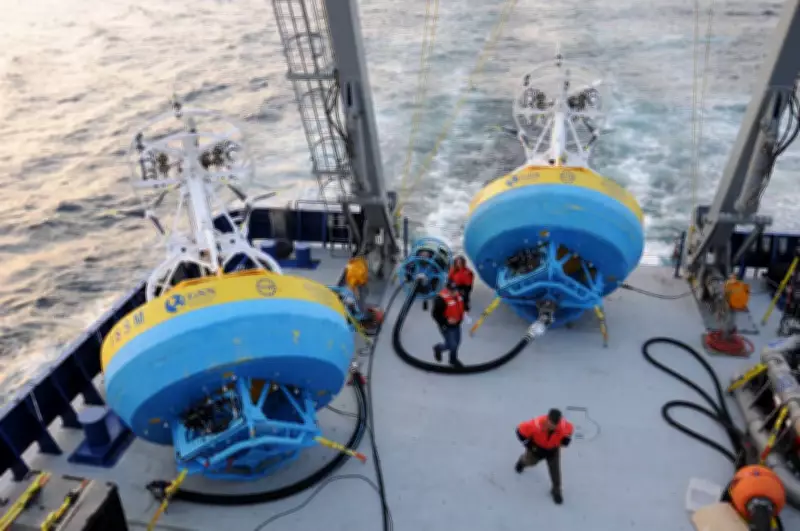
The oceans bordering our continents have long been a quiet backdrop to daily life. As we take the weekend off to visit the seaside, observe cargo vessels arriving at the nearby harbour, or purchase the latest catch from the ocean, we rarely pause to consider the complicated technological system running silently below the water surface. For most people, the ocean can seem vast and self-sustaining. It is easy to assume that forecasting services and maritime communications run on their own. But abrupt changes in federal research funding can quietly dismantle systems like this.
Scientists say the shutdown is causing concern because underwater data helps predict coastal storms and support fisheries. For about a decade, a network of buoys and seafloor equipment has continuously monitored changes in ocean conditions. Agencies are beginning to retrieve the devices, leaving researchers with far less data. Removing these monitoring devices risks making it harder to detect changes in the ocean environment.
A crucial marine tracking network faces an unexpected budget termination
To understand the scale of the system, look at the public science initiative that has monitored ocean conditions for more than a decade. A detailed report published by the Associated Press highlights the immense scale of this network. The Ocean Observatories Initiative relies on more than 900 automated sensors across key marine zones. Built with $386 million in public funds, the project has made live ocean data publicly available and has informed hundreds of scientific papers.

The move to dismantle the equipment has sparked a dispute in Washington. Lawmakers say ending a functioning project that was legally approved without their consent is an abuse of power. Administrators say the shutdown is part of a shift in scientific priorities, while opponents argue that losing the monitoring leaves a security gap. Scientists warn that this data cannot be replaced later. The shutdown leaves researchers and coastal communities facing significant uncertainty.
The long-term consequences of losing our deep-sea eyes
The fallout could extend beyond politics and disrupt long-term climate records. A secondary analysis by the Associated Press emphasises that this deep-water data cannot simply be replaced later. Scientists say decades of uninterrupted observations are needed to detect meaningful patterns. If the sensors are shut down, researchers will lose real-time data on currents and water temperatures, making storm-warning models harder to build.
The loss is forcing local marine facilities and weather agencies to rethink how they track environmental trends. The report says the shutdown comes amid calls for deep cuts to national science budgets, leaving less funding for these organisations to maintain basic monitoring programs. For commercial fishers, beach managers, and first responders, losing the network adds significant uncertainty.