

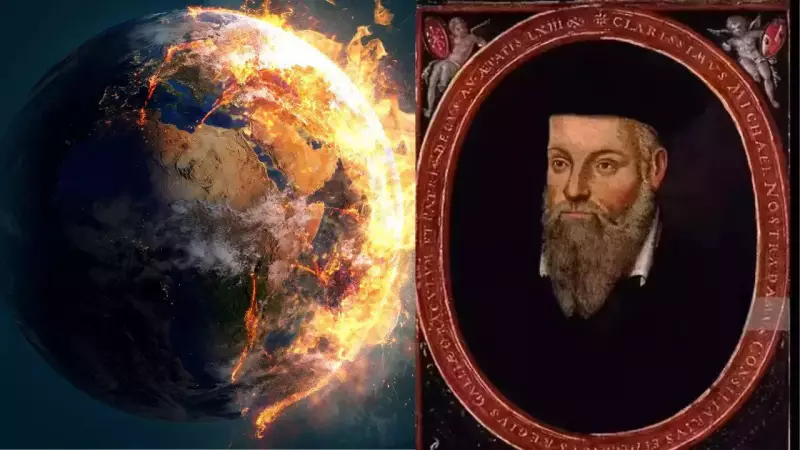
As the world steps into 2026, the enigmatic prophecies penned by the 16th-century seer Michel de Nostredame, known as Nostradamus, are experiencing a significant resurgence in global interest. His cryptic collection, Les Prophéties, containing 942 quatrains, continues to baffle and fascinate scholars and the public alike. With the contemporary landscape marked by the aftermath of a global pandemic and volatile geopolitical strife, such as the war between Russia and Ukraine, many are turning to these ancient texts in search of clues about the future.
The Ominous 2026 Prophecies: War, Suffering, and Specific Timelines
Among the most discussed predictions attributed to the year 2026 is a particularly chilling quatrain. It states: “seven months great war, people dead through evil,” followed by the line “Rouen, Evreux the King will not fail.” The specification of a seven-month timeframe is what many modern interpreters find deeply alarming. Nostradamus often wove references to places and monarchs of his own era into his verses, which analysts now decode as potential warnings of future European conflicts.
Reports, including those from the International Business Times UK, suggest that this prophecy could be linked to the ongoing Russia-Ukraine war reaching a critical, devastating phase in 2026. Here, the term “evil” is interpreted not just as violence but as profound human suffering. This aligns with the historical analysis of Nostradamus's work, where true understanding often comes from post-event explanation. For instance, his lines about “two cities” struck by unprecedented plagues are widely believed to have foreshadowed the atomic bombings of Hiroshima and Nagasaki.

Symbols of Conflict and Sudden Upheaval
Another verse pointing to 2026 mentions that “Mars rules the path among the stars.” In astrological symbolism, Mars is the planet of war. Contemporary readings of this indicate a large-scale mobilization of military forces across Europe, Asia, and possibly the Americas, suggesting the year may witness extensive military operations beyond localized fighting.
Further adding to the foreboding tone is a prophecy from Century I, quatrain 26, which reads: “A great man will be struck down in the day by a thunderbolt.” Speculation abounds that this could refer to a shocking, public event involving a major political leader like Donald Trump or Vladimir Putin. While it could literally indicate a meteor strike, it is more commonly seen as a metaphor for a sudden assassination, a sophisticated attack, or an event that dramatically overturns global leadership.
Unexpected Threats and a Glimmer of Hope
The prophecy that “the Ticino will overflow with blood” is especially unsettling as it references the peaceful, neutral Italian-speaking region of Switzerland. Analysts posit this could signify that future conflicts might spill into areas traditionally considered safe havens. The “blood” may represent military casualties, epidemic outbreaks, or the severe consequences of political turmoil.
In a more cryptic warning, Nostradamus writes of a “great swarm of bees” emerging from a “night ambush.” This is unlikely to be about actual insects but is interpreted as a symbol for a surprising new threat. This could manifest as a swarm of drone technology, a devastating cyber-attack, or even a novel biological weapon, arriving with sudden and unexpected force.
However, amidst these dark visions, Nostradamus concludes his 2026 sequence with a beacon of hope: the emergence of “the man of light.” This figure is prophesied to guide humanity through the turmoil. For many, this offers a reassuring narrative that after periods of intense darkness and destruction, renewal and recovery are possible, painting Nostradamus not solely as a prophet of doom but also of eventual rebirth.






