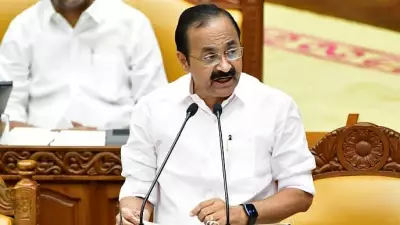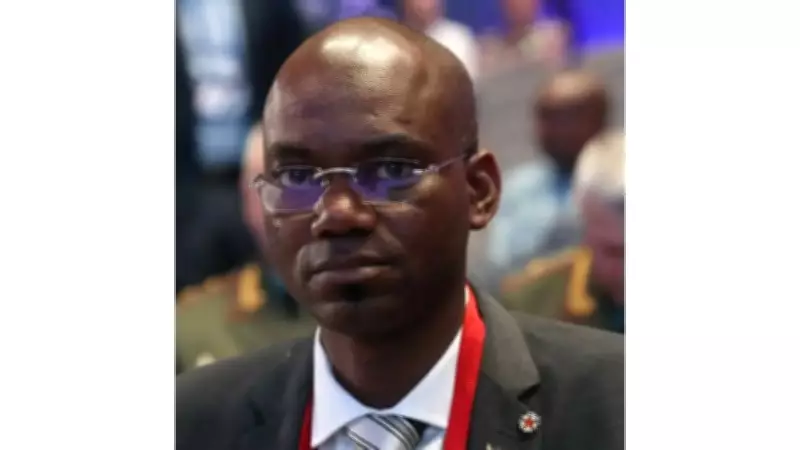
Mali's security crisis escalated sharply after Defence Minister Sadio Camara was killed in an attack on his residence in Kati on Saturday, according to RFI Radio reports. The killing occurred amid a wave of coordinated strikes involving separatist fighters and Al-Qaeda-linked militants that targeted the capital Bamako and several other cities across the country.
Coordinated Attacks Rock Mali
The violence marks one of the most serious security escalations in recent years. Separatist groups in the north confirmed they joined forces with Islamist militants in the coordinated assault on Malian army positions. The attacks, which left at least 16 people injured including civilians and soldiers, were initially claimed by the Al-Qaida-linked group Jama'at Nusrat al-Islam wal-Muslimin (JNIM), but later confirmed to involve a joint operation with the Tuareg-led separatist group Azawad Liberation Front (FLA).
Violence erupted early Saturday with gunfire and explosions reported near Bamako's Modibo Keita International Airport and the Kati military base, one of the country's key defence installations outside the capital. Similar attacks were reported in the central and northern cities of Sevare, Kidal, and Gao.

Witness Accounts and Government Response
Witnesses reported heavy gunfire, explosions, and the deployment of military helicopters as security forces moved in. Roads were blocked and residents were urged to remain indoors as fighting continued. A three-day overnight curfew was later imposed in Bamako from 9 pm to 6 am.
United Nations Secretary-General Antonio Guterres condemned the attack. According to a statement issued by a UN spokesperson: "The Secretary-General is deeply concerned by reports of attacks in several locations across Mali. He strongly condemns these acts of violence, expresses solidarity with the Malian people, and stresses the need to protect civilians and civilian infrastructure."
Separatists Confirm Alliance with Islamist Group
In a significant development, FLA spokesperson Mohamed El Maouloud Ramadan confirmed that separatist fighters had taken part in the attacks alongside JNIM, according to the Associated Press. "This operation is being carried out in partnership with the JNIM, which is also committed to defending the people against the military regime in Bamako," he said in a statement. The separatists also claimed control over parts of Kidal and Gao, key cities in northern Mali, signalling a renewed push for influence in the region where they have long sought an independent state called Azawad.
Casualties and Government Measures
Mali's government said 16 people were wounded in the attacks, including both civilians and military personnel. Several militants were killed, though officials did not provide exact numbers of attackers neutralised. State television confirmed that Malian forces were "engaged in eliminating the attackers," while authorities imposed emergency restrictions to stabilise the situation in the capital. The governor of Bamako's district announced a strict curfew, and security forces were deployed across sensitive locations, including the airport zone and military installations.
Regional Concern and ECOWAS Reaction
The Economic Community of West African States (ECOWAS) condemned the coordinated attacks and called for stronger regional cooperation to counter rising militant violence across the Sahel. Security analysts said the coordination between jihadist groups and separatists marks a worrying shift, potentially complicating already fragile counterinsurgency efforts in Mali and neighbouring states. The separatist group also issued a statement urging Russia to reconsider its support for Mali's military government, alleging that foreign backing has worsened conditions for civilians.
Broader Sahel Context
Mali's junta, which came to power through coups in 2020 and 2021, has increasingly relied on Russian security assistance after reducing cooperation with Western partners. However, the security situation has continued to deteriorate, with rising militant attacks and recurring clashes across the country. The attacks come amid a broader surge in violence in the Sahel region, where Islamist insurgencies and separatist movements have expanded despite years of military operations and international support efforts.