As the final hours of 2025 tick away, the global stage is set for another year of significant geopolitical challenges. The year-end analysis points to three dominant trends that will shape the international landscape in 2026: a protracted Russia-Ukraine conflict, heightened tensions between China and Taiwan, and a world order in profound flux. These developments hold crucial implications for India and its strategic positioning.
Russia-Ukraine War: No End in Sight Despite Diplomacy
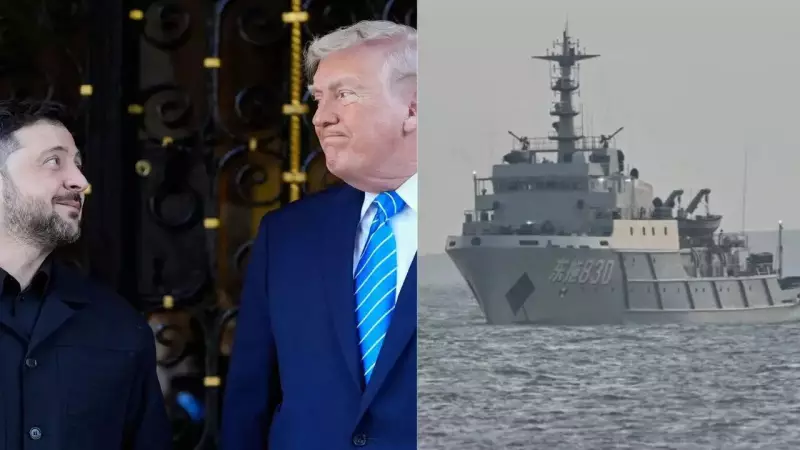
The war between Russia and Ukraine appears poised to continue into 2026, with little hope for a near-term resolution. Recent diplomatic efforts, including a meeting between former US President Donald Trump and Ukrainian President Volodymyr Zelenskyy in Florida, failed to break the deadlock. Russia has shown no genuine interest in ending the conflict, a stance highlighted by a recent incident where Moscow accused Ukraine of launching 91 long-range drones at an official residence of President Vladimir Putin.
However, Russia refused to provide any evidence for this claim. Ukraine has denied the allegation, countering that it is a deliberate falsehood by the Kremlin designed to sabotage peace talks. Moscow has used this purported attack to justify hardening its negotiating position. This pattern reveals a clear strategy: whenever dialogue between Ukraine and its allies shows progress, Moscow acts to disrupt it. The conclusion is that insufficient pressure has been applied on Russia to force it to negotiate seriously, meaning this brutal war will likely drag on throughout the coming year.

China-Taiwan Tensions Reach a New Peak
The close of 2025 witnessed China conducting unprecedented military drills around Taiwan. These exercises were a direct response to two key events: the United States approving a substantial $11 billion arms package for Taiwan, and controversial remarks from Japan's Prime Minister Sanae Takaichi about potential military deployment if China attacks the island.
The drills serve as a stark demonstration of Beijing's capability to impose a blockade on Taiwan, signaling that external forces might be powerless to intervene. The critical question for 2026 is whether China will move from posturing to actual military action. Will Beijing risk its economic stability for an invasion? Alternatively, could it leverage its partnership with Russia to create a diversion? Analysts suggest much depends on Chinese President Xi Jinping's internal political calculus and any fears about his post-power security, which could make him more desperate and prone to aggressive action against Taiwan.
A World Order in Transformation
Beyond these major flashpoints, the broader international system is undergoing a fundamental reshuffle. The post-Cold War order is giving way to a more fragmented and competitive landscape. Major powers like the US under Trump, China under Xi, and Russia under Putin are asserting their visions, while a coalition of middle powers led by India, Turkey, Saudi Arabia, Brazil, and the UAE is actively carving out a more influential role.
This global jostling for strategic space is evident in multiple regional conflicts and pivot points:
- Secondary conflicts in Sudan, Yemen, and along the Thailand-Cambodia border.
- Persistent India-Pakistan tensions.
- Regional hotspots like Gaza and the Kurdish issue in Syria and Turkey.
- China's expanding influence in South Asia and US maneuvers in South America against Venezuela.
This intense competition for strategic depth and influence among global actors defines the current era of flux, a trend that will undoubtedly intensify in 2026. For India, navigating this complex environment while securing its national interests will be a paramount challenge.