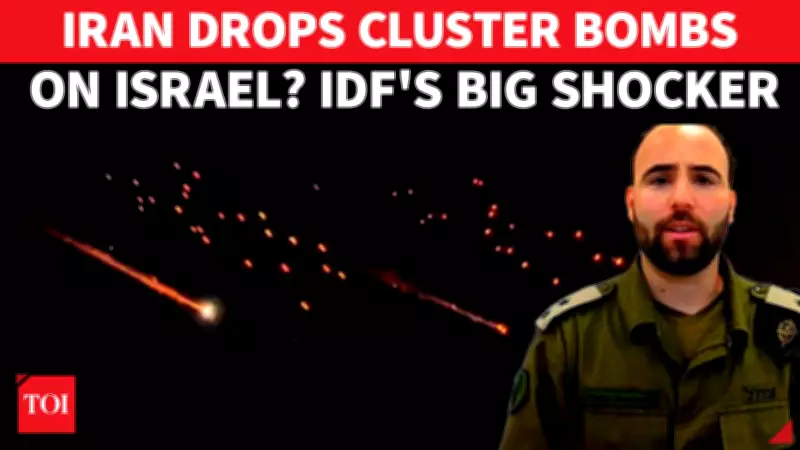
Israel Accuses Iran of Using Cluster Bombs in Missile Strike, Labels It a War Crime
In a dramatic escalation of regional tensions, the Israeli Defense Forces (IDF) have accused Iran of employing cluster bombs in a recent ballistic missile attack on Israel. The IDF described the incident as a potential war crime, citing the use of weapons designed to disperse multiple explosive sub-munitions over wide areas, which significantly increases risks to civilian populations.
Footage Reveals Fiery Fragments Raining Down Over Israel
Videos from the scene showed fiery fragments descending over Israeli territory as Iran launched the missiles. According to Israeli military reports, these missiles were equipped with cluster warheads that split mid-air, scattering approximately 20 bomblets across an eight-kilometer radius. This technology is notorious for its indiscriminate nature, often causing widespread damage and casualties beyond military targets.
The IDF emphasized that such weapons dramatically heighten the danger to non-combatants, as the bomblets can cover large urban or rural areas, making it difficult to control their impact. This allegation comes amid heightened tensions between Israel and Iran, with both nations engaging in a series of retaliatory actions in recent months.

International Concerns Over Cluster Munitions
Cluster bombs are widely condemned by international humanitarian organizations due to their potential to cause excessive harm to civilians. Many countries have banned their use under treaties like the Convention on Cluster Munitions, although neither Iran nor Israel are signatories. The IDF's claim highlights ongoing concerns about the proliferation of such weapons in conflict zones.
This incident underscores the volatile security situation in the Middle East, where proxy conflicts and direct confrontations have become increasingly common. Analysts warn that the use of cluster munitions could lead to further escalation, drawing in global powers and destabilizing the region further.
Background of Rising Tensions
The missile strike is part of a broader pattern of hostilities between Iran and Israel, which have been at odds over issues such as nuclear programs, regional influence, and support for militant groups. Recent months have seen a spike in military engagements, including air strikes and naval incidents, raising fears of a full-scale war.
In response to the attack, Israeli officials have vowed to take necessary measures to protect their citizens and may seek international condemnation of Iran's actions. The United States and other allies are closely monitoring the situation, with potential implications for diplomatic and military strategies in the Gulf region.
As the conflict intensifies, the humanitarian impact remains a critical concern, with civilians caught in the crossfire of advanced weaponry like cluster bombs. The world watches anxiously, hoping for de-escalation and a return to dialogue to prevent further loss of life.